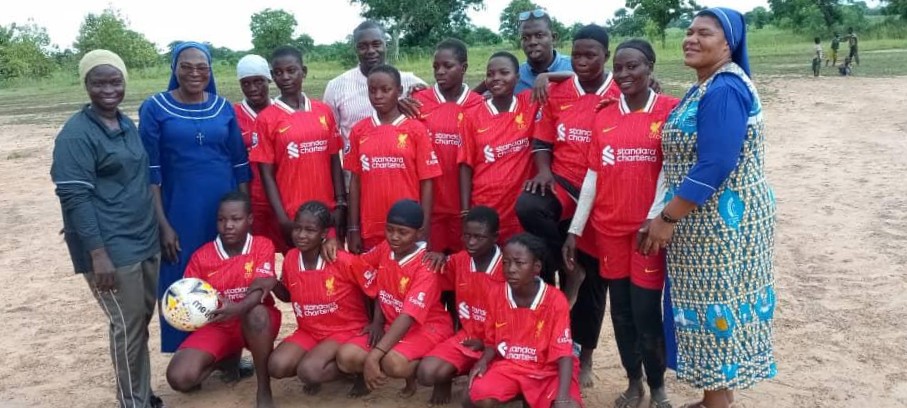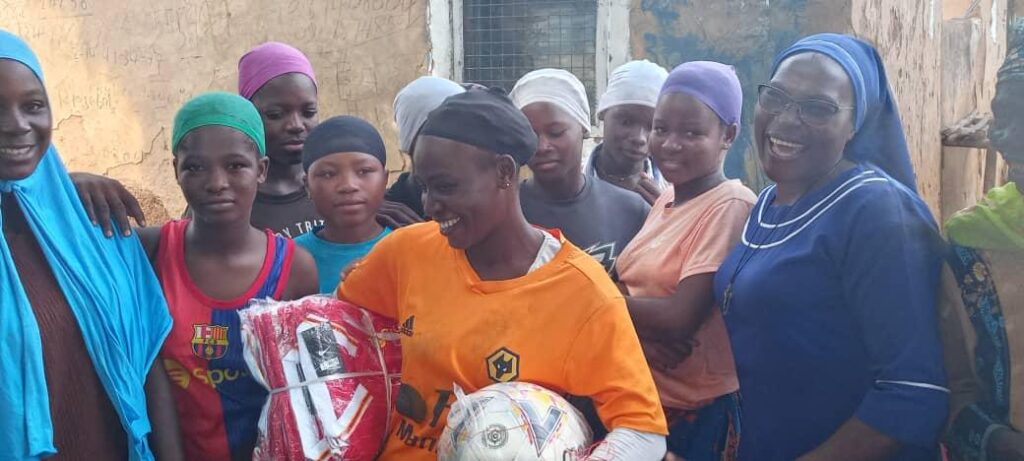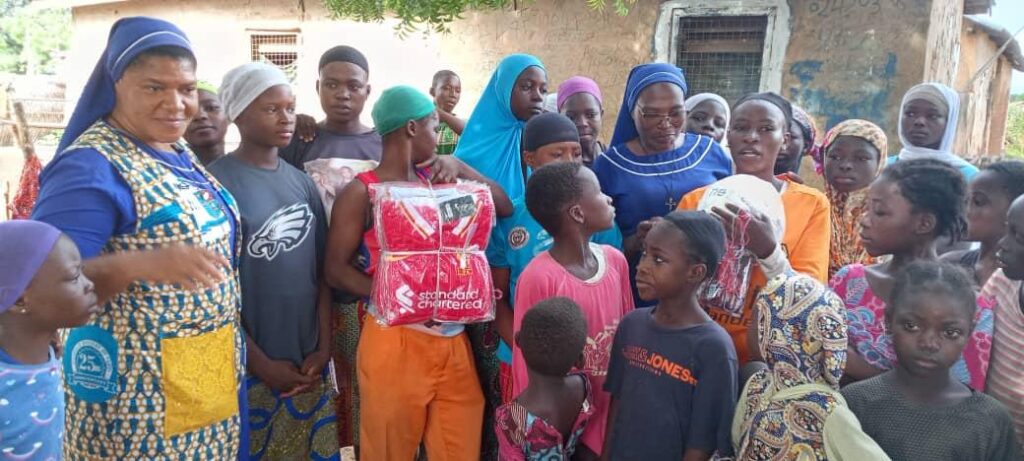
May 27, 2026, was a joyful day for Africa Faith and Justice Network (AFJN) and the people of Tusani, a rural community in the Yendi Municipal District in northern Ghana, as we came together to evaluate our girls’ soccer program. This initiative proved highly successful in empowering young girls, building their confidence, and strengthening community support for their growth and development.
Our engagement in this area begin in May 2023 when AFJN (team from Washington, DC), together with our Ghana partner, paid an advocacy visit to His Majesty, the Yaa Naa of Yendi, the Paramount King of the Dagbon Kingdom. The advocacy visit was to seek His Majesty’s support in addressing the prevalence of early and child marriage, as well as teenage pregnancy, within his kingdom. Research showed that these practices remain highly prevalent in Northern Ghana, where child marriage is as high as 39% and teenage pregnancy rate approximately 24%.
During our meeting at the palace of the Yaa Naa, we learned that these harmful practices and social challenges are especially widespread in rural and economically disadvantaged communities within the Kingdom. Given that these practices affect the health, education, rights, and future opportunities of these girls as well as the well-being of the families and communities, AFJN began engaging some of the most vulnerable communities through sensitization programs and awareness campaigns, helping the communities see the dangers and negative impact of these practices on the development of their children, the families and the communities at large.
In 2024, we began engagement with the Tusani community. Alongside community sensitization efforts, we introduced a girls’ soccer club as strategy to reduce the incidences of these harmful practices in the community. We also introduced girls’ soccer club as a platform to equip the girls with critical life skills such as self-confidence, self-esteem, self-determination, teamwork, and emotional regulation.
When AFJN introduced girls’ soccer initiative, we met with resistance from both the girls and the wider community, particularly mothers who had been socialized to believe that young girls should remain at home to perform household chores, while soccer and other outdoor games were reserved for boys, who in turn were not expected to participate in domestic responsibilities.
However, through sustained community education, dialogue, and persuasion, the community gradually accepted the initiative and eventually welcomed the girls’ soccer program. Given that this is a pilot program and because of the initial reluctant from the community 15 months ago when the girls’ soccer club was introduced as a tool to address child/early marriage and teenage pregnancy, decided to conduct an assessment of the soccer program.
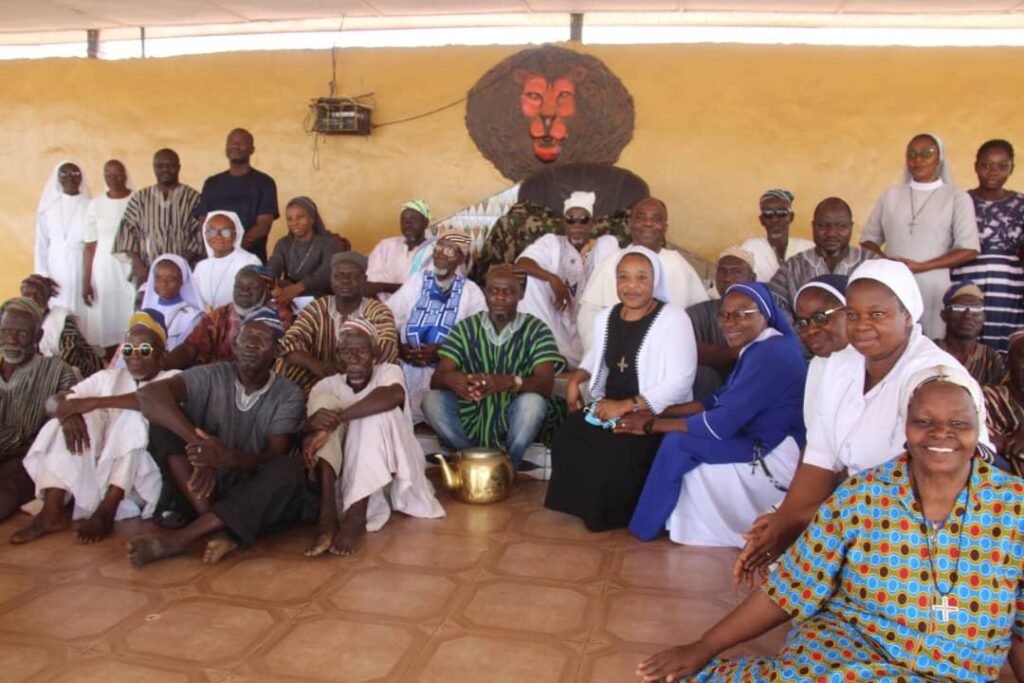
On May 27, our team in Yendi held an evaluation meeting, bringing together our girls, their parents, and other members of the community. During the meeting, our team and the community jointly reflected on impact the girls had participating in soccer club over the past months.
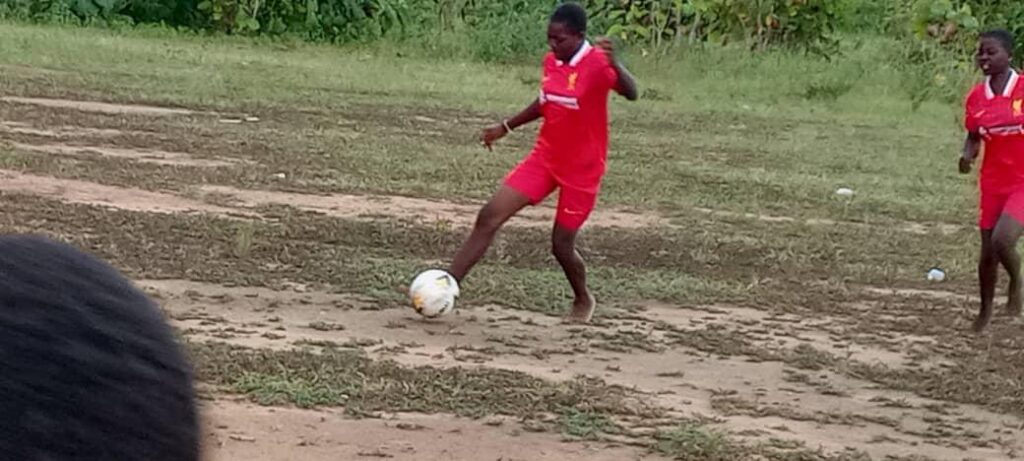
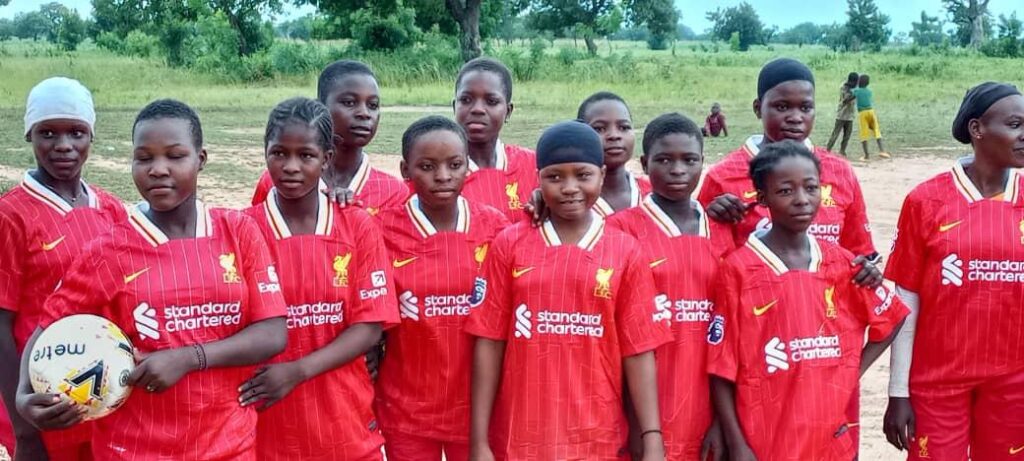
Our team was excited to observe the remarkable transformation among the girls during the meeting. They noticed the girls’ boldness and self-confidence talking in the public compared to the timid behavior they displayed 15 months ago when the club was initiated. One of the team members, Sr. Monica was excited that the girls did not shy away from showing their great enthusiasm in the soccer.
Our team was encouraged to hear from the community members that since the introduction of soccer for their girls they are more disciplined, united and very committed to their school work. The team was further encouraged when the community leader announced with AFJN engagement with the community and the introduction of the soccer girls club that there have been no recorded cases of early/child marriage or teenage pregnancy. He added, “Our girls no longer roam the streets anymore, they mind their business.”
Introducing soccer club as a tool for tackling child/early marriage and teenage pregnancy and getting the community to buy into this idea was not an easy one, especially in the community that believes that sports activities are for boys while girls are expected to focus on household responsibilities or get married and that dressing in a standard soccer uniform is not modest for their girls.
Having initiated this soccer girls’ program, I am deeply encouraged about the outcome despite the initial socio cultural and religious challenge we encountered and because we were able to overcome these challenged and recorded positive outcomes. Now that the community has been seeing the benefit of this initiative, we hope that we will also overcome the current difficulties of lack of soccer equipment, inadequate training facilities and limited financial resources for transportation our girls to meet and interact with their peers in other communities. Additional support is therefore needed to strengthen the program’s outcomes and facilitate its expansion to other rural communities where AFJN has been invited to provide similar support and interventions.