Download the PDF file of this report here
Introduction
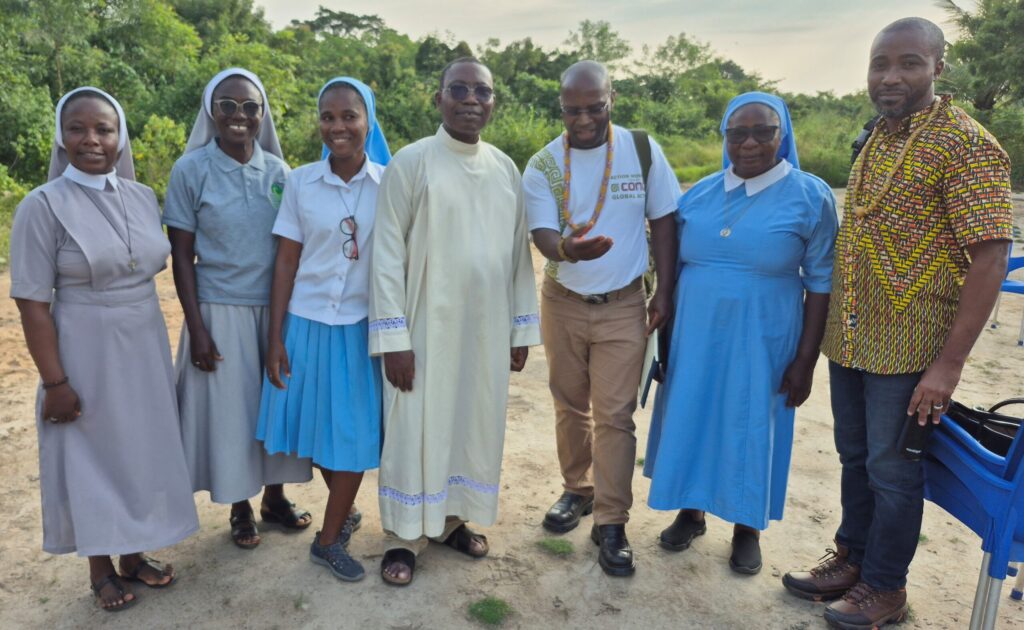
Since 2014, the Africa Faith and Justice Network (AFJN) has been at the forefront of campaigns against land grabbing in the Volta and Oti regions of Ghana, while also promoting alternative models of responsible investment. This report summarizes recent visits and findings from field visits to several towns and villages in Ghana. It documents attempted land acquisitions by predatory investors, community vulnerabilities, environmental concerns, and the impact of AFJN’s ongoing educational initiatives. The mission aimed to strengthen awareness and prevention efforts around land grabbing, introduce alternative approaches to responsible investment, assess current challenges, evaluate the effectiveness of past interventions, and develop strategies to enhance community resilience against predatory investors.
Case Studies
1. Anfoe: Two Failed Attempts at Land Grabbing
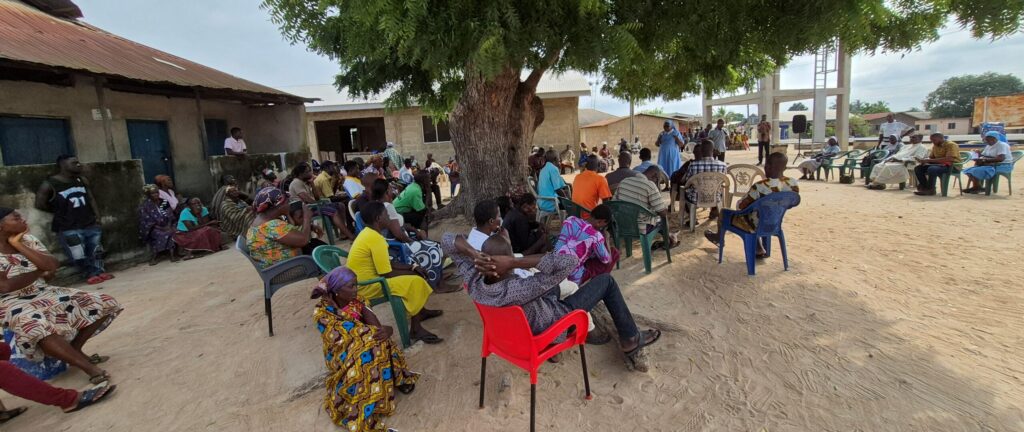
In July 2025, AFJN visited Adaklu Anfoe to learn about the community’s efforts to resist predatory land grabbing. This community has previously benefited from AFJN’s land grabbing awareness campaign. Since then, the community has successfully resisted several potential predatory land deals, thanks to the assistance of a local lawyer – who is a member of the community – who spoke at the community town hall organized by AFJN. AFJN documented two major failed attempts at land grabbing.
First Attempt

Residents reported that their leaders, mostly Ghanaians, attempted to sell their land to investors at below-market prices. The community shared instances of tactics used by investors to deceive them. In one instance, they were taken to The Golden Tulip Hotel, a luxury hotel, where they were offered lavish food and drinks and pressured to sign the agreement – a document they called a Memorandum of Understanding (MOU). Upon review, it became clear that the document was actually a binding contract with terms harmful to the community. The investors insisted on paying their own price, rather than the asking price and the deal would have deprived them of their livelihoods, as the agreement prohibited farming on the land. The lawyer, whose intervention was decisive, advised the leaders not to sign, and the company reacted angrily, expelling them from the venue as if they had committed an offense.
Second Attempt
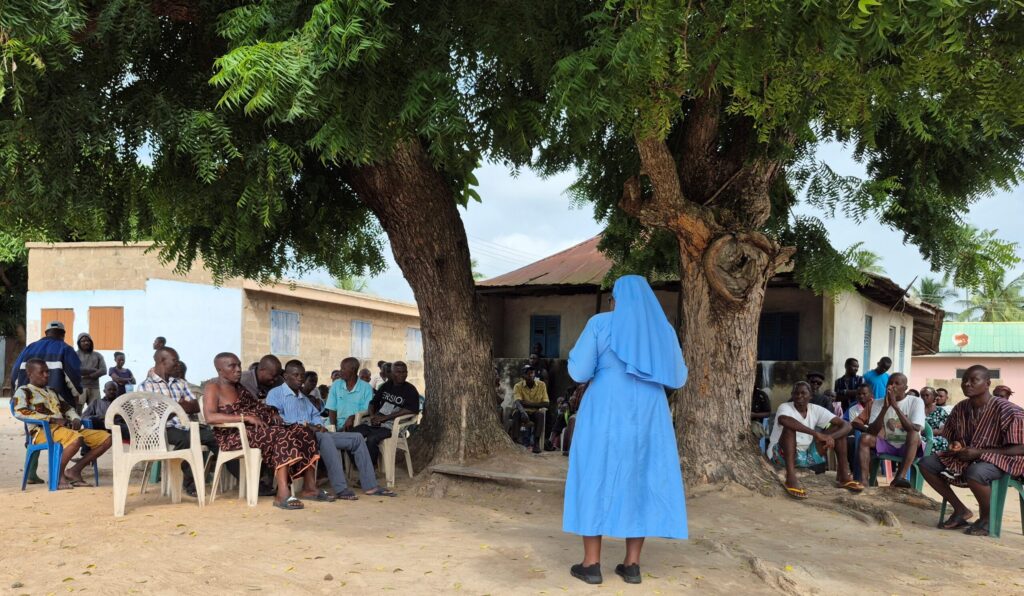
A different company began moving agricultural equipment onto the land even before any agreement was signed. Representatives pressured the community to urgently sign another unfair contract disguised as an MOU. The lawyer intervened, highlighting exploitative clauses, and advised the community not to sign the contract. The community again refused to sign, and the company responded with hostility, forcing them to leave the venue.
These experiences highlight the sophisticated tactics used by investors to acquire land from vulnerable communities. Anfoe’s experience underscores the importance of legal literacy, local expertise, and vigilance. The community’s refusal to sign under pressure prevented exploitation and highlights the need for continuous awareness and education. While the presence of a community lawyer was instrumental in resisting the predatory land deals, the need for greater support and protection for small-scale farmers and communities facing land grabbing attempts remains critical. Security concerns from Fulani herders have further complicated the land issue, pressuring locals to sell to rogue investors.
Ongoing Inquiry
AFJN continues to gather detailed information on two suspected land-grabbing attempts in Anfoe to ensure accurate documentation. The organization is examining key elements such as the size of land involved, the nature of offers made, and the consent process, as well as identifying any foreign actors involved. Additional areas of inquiry include the existence of arbitration clauses outside Ghana, the presence or absence of legal representation during negotiations, the number of landowners involved, and the nationality of the investors. This information empowers communities to resist exploitative land deals, strengthens protections for small-scale farmers, and provides a model for other communities confronting similar challenges.
2. Avevi Townhall Meeting
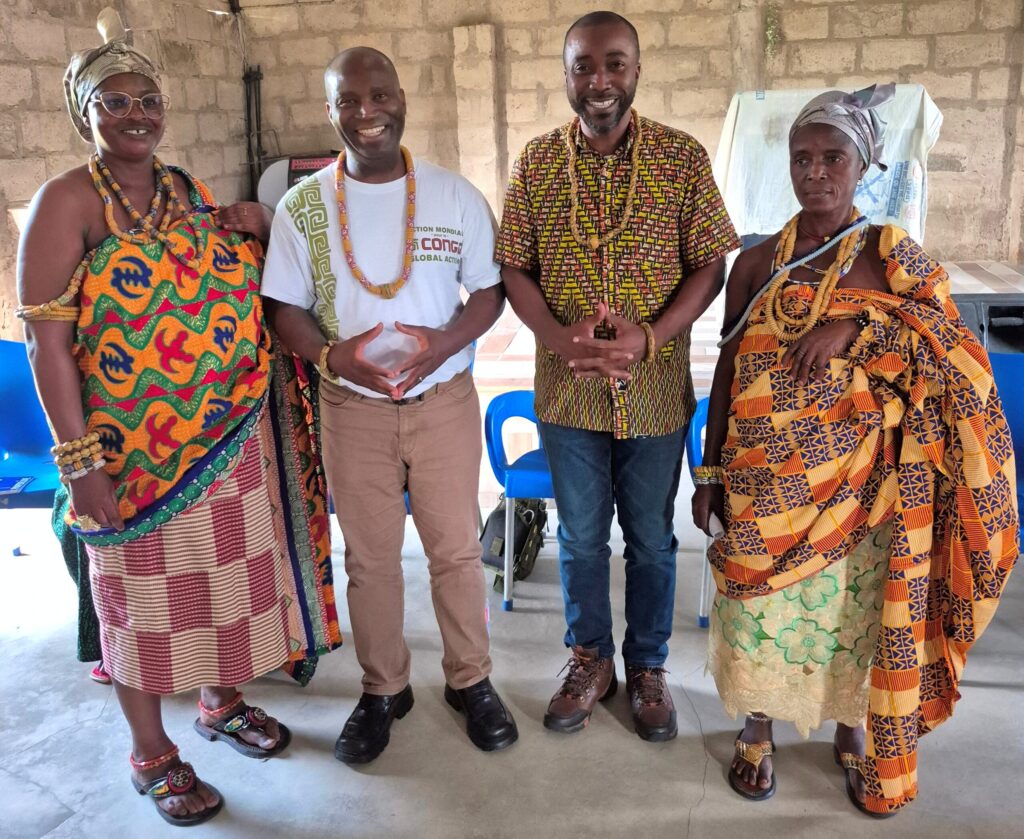
In July 2025, AFJN held a town hall meeting in Avevi, under the leadership of His Royal Highness Chief Togbui Bosoka III and other newly installed chiefs. Avevi’s vast lands make it a target for predatory investors. The chief emphasized land’s importance, saying “Avevi is built on the strength of its land and resilience of its people.” However, poverty and lack of infrastructure make locals vulnerable to false promises. A harsh reality hit home when AFJN’s local activities coordinator couldn’t get treatment for an injury because the local health center’s lack of medication.
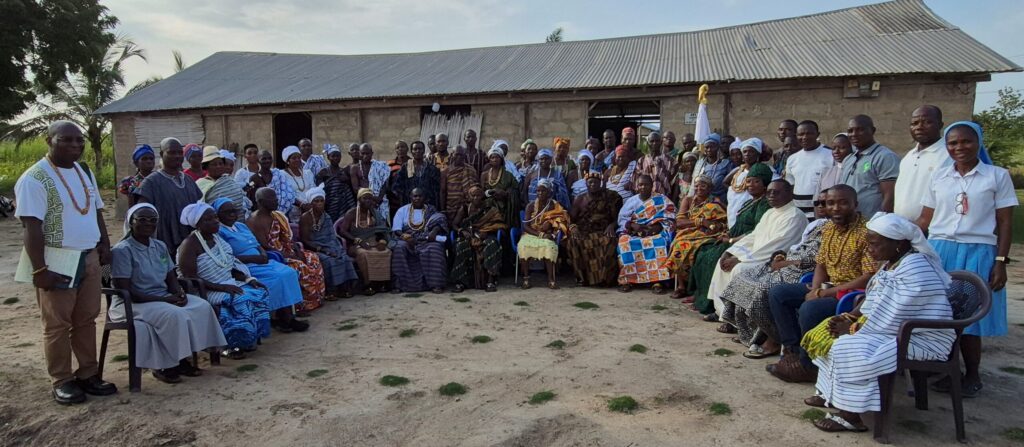
A total of 100 chiefs from over 30 communities participated in the meeting, with women and young leaders representing half of those in attendance. The community raised a critical issue: landowners selling land without involving chiefs, making the community vulnerable to predatory investors. Investors capitalize on the lack of centralized oversight, buying land cheaply without adequate safeguards for the community. This practice undermines the chiefs’ authority and puts the community’s future at risk. They also expressed concerns about the use of herbicides by investors, which harm the environment and destroy medicinal grasses. They suggested alternative fertilizers, such as pig feces, and sought support for sustainable land management practices. The chiefs expressed deep appreciation for the training and emphasized how it strengthens their ability to protect their lands and communities. Two months after the training, neighboring communities requested similar workshops, demonstrating both the urgency and the relevance of the program.
3. Helekpe: Tourism Potential and Land Value
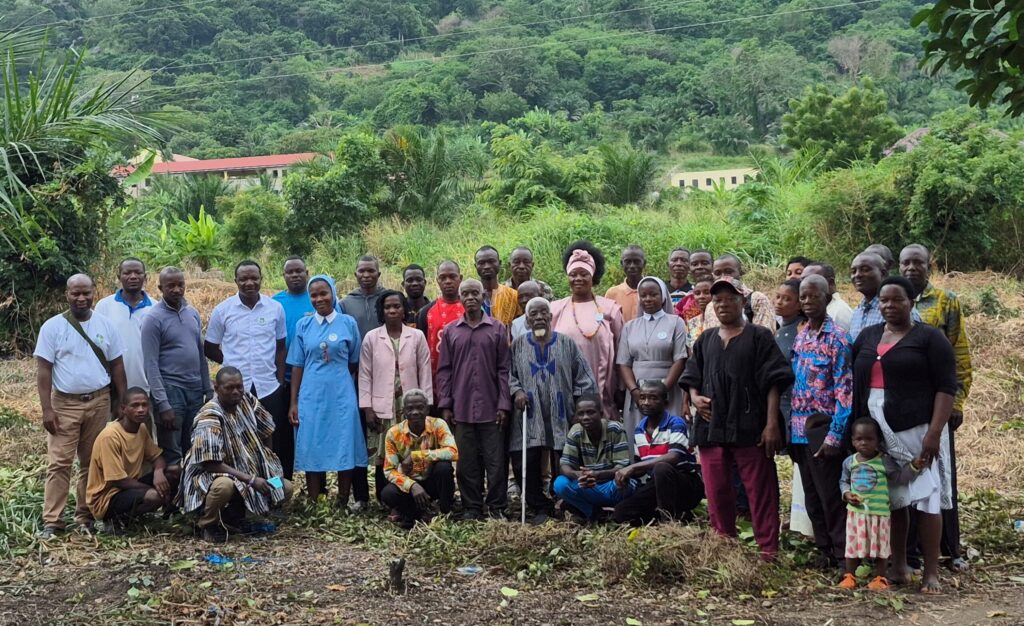
The people of Helekpe believe their land holds great potential for tourism development and job creation. Unfortunately, government forestry projects have already taken some of their land without fair compensation. AFJN community engagement emphasized that the community has to understand the true value of their land and evaluate every foreign investment proposal carefully. Without this knowledge, they risk losing their land without gaining lasting benefits.
4. Brewaniase: Reflection on a Decade of Advocacy
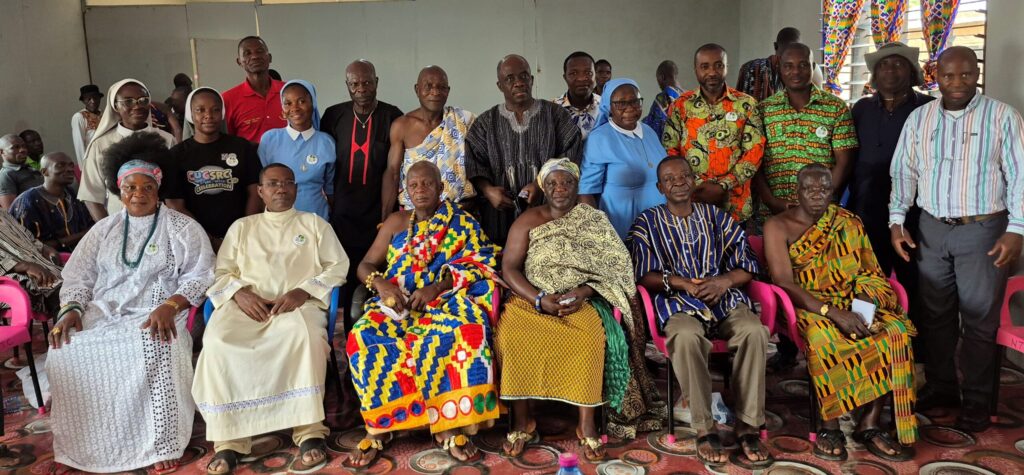
The follow-up and education gathering held in Brewaniase convened 67 traditional leaders from beneficiary communities, including Bontibor, Pusupu, Nkunda, Obanda, Dodofie, Dormabin, Abrewankor, Abrubruwa, Frankyenekor, Tamale, and Chaiso. The gathering demonstrated the reach and impact of AFJN’s education and awareness-raising initiatives on land grabbing risks and promoting responsible investment. Brewaniase has long been central to AFJN’s campaign against land grabbing. In 2014, AFJN launched its first land-grabbing awareness program in this town, focusing on the case of SG Sustainable Oils Ghana Limited, a subsidiary of the American company Herakles Farms. In fact, more than 60 landowners from Brewaniase, Asikookoo Zongo, and Frankyeneko had previously entered a disastrous lease agreement with the company, which acquired 3,750 hectares for 50 years at $5 per hectare per year, with an option to renew for an additional 25 years.
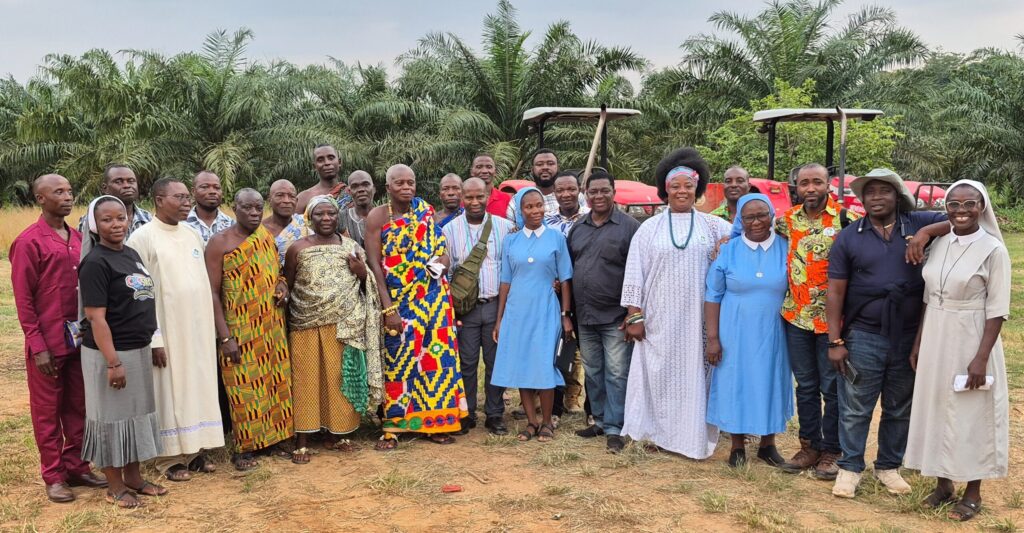
SG Sustainable Oils Ghana Limited failed to deliver many of the promised social benefits—including libraries, scholarships, and boreholes—leaving communities disillusioned. During our meeting with Volta Red, the company that purchased SG Sustainable Oils Ghana Limited’s lease, management acknowledged disputes with the landowners’ association that delayed these commitments. AFJN helped both sides recommit to full implementation of the lease terms, including the provision of legible copies of the lease to all landowners and the long-overdue construction of a community library.
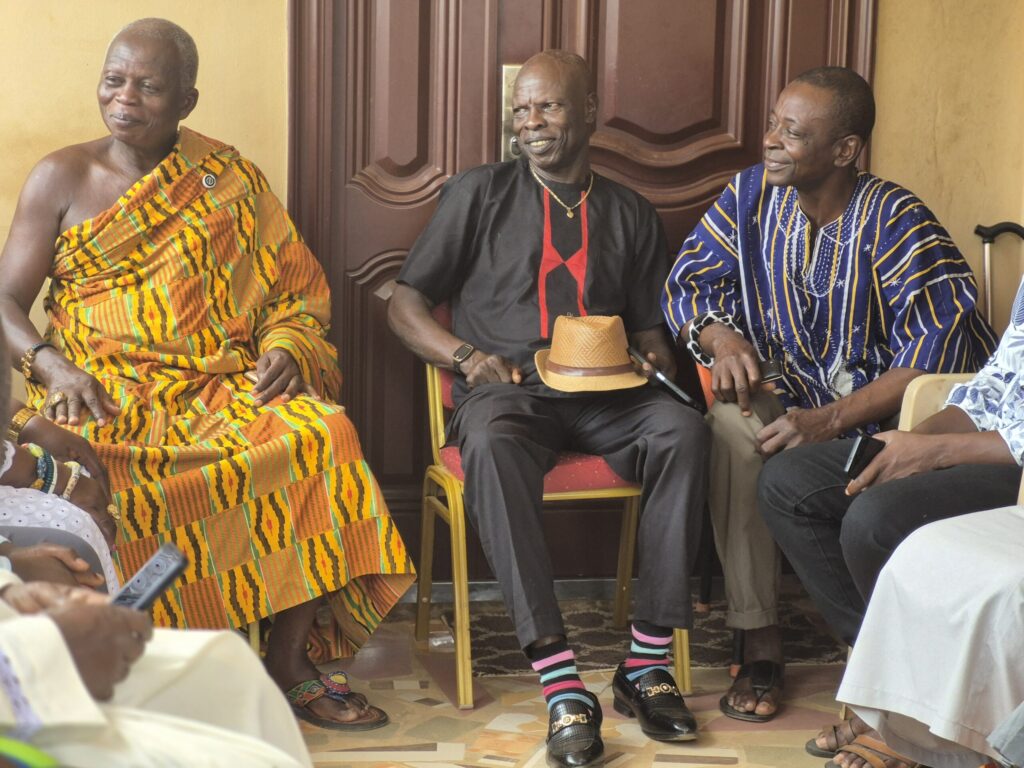
Since AFJN’s initial intervention, several positive outcomes have emerged in terms of community land grabbing awareness and prevention. Paramount Chiefs and community leaders now regularly advise landowners against exploitative leases. Many landowners have rejected predatory contracts after AFJN’s training.
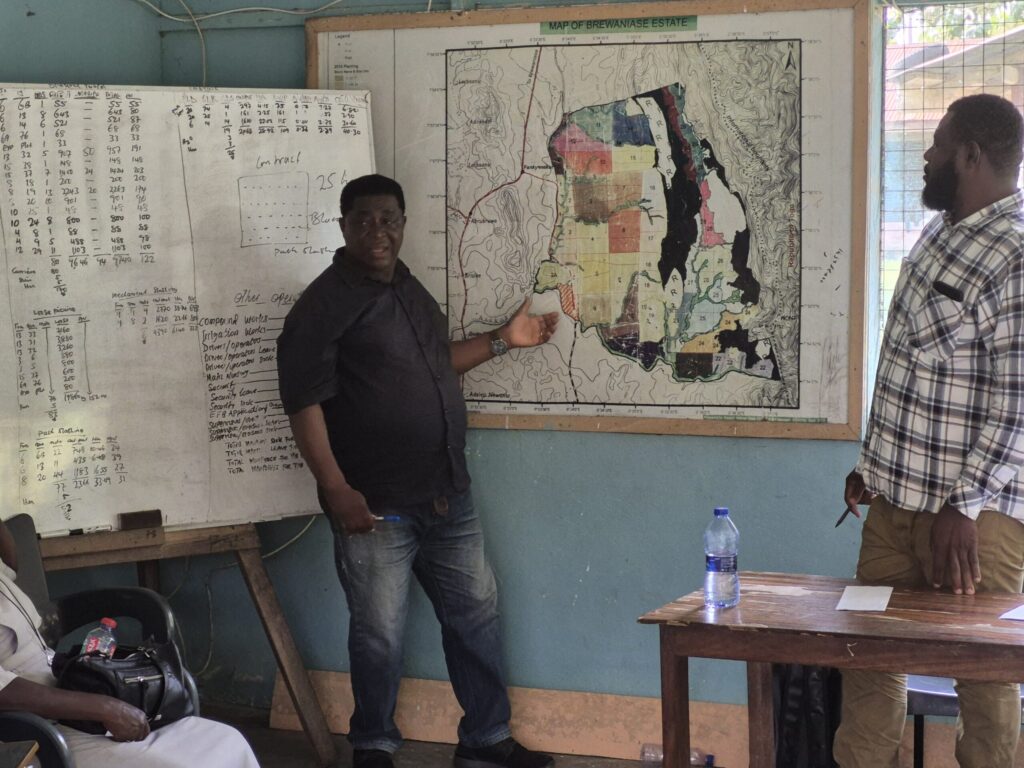
Despite these gains, significant challenges persist. Investors continue to employ deceptive practices, including misrepresentation of project intentions. Royalty payments to traditional authorities are frequently not honored, and lease agreements often lack clarity and transparency. As a result, communities continue to feel exploited, with benefits disproportionately accruing to individual landowners rather than to the wider community.
During the gathering, a representative from Dormabin reported that an investor initially sought land under the pretext of constructing an airport; however, the project later proved to be a real estate development. Similarly, in the case involving Volta Red, scholarship support was reported to be limited to a small number of students.
A key lesson emerging from the Brewaniase engagement is the critical importance of continuous community education. Traditional leadership structures frequently change, and many newly installed Chiefs—now serving as custodians of community land—have not participated in earlier AFJN training workshops. This underscores the need for regular follow-up engagements to refresh knowledge, strengthen vigilance against land grabbing, and ensure sustained protection of community land rights.
Community participants urged Africa Faith and Justice Network to continue its advocacy for fair, transparent, and inclusive land agreements. They emphasized the importance of increased accountability and meaningful community participation in all land negotiation processes to ensure equitable and long-term benefits for entire communities.
5. Town Hall Meeting in Zomayi
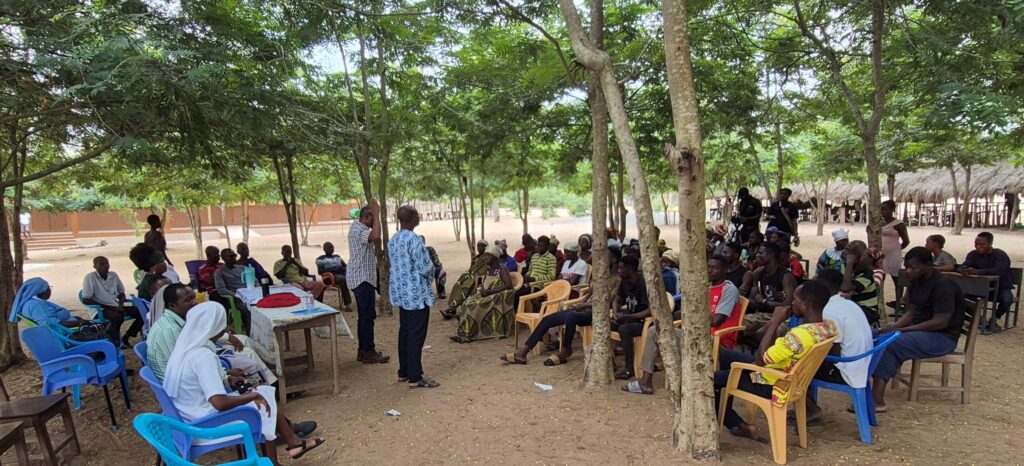
The gathering in Zomayi brought together close to 100 residents who reported serious concerns about the impact of agribusiness activities on their health and livelihoods. Together with Morkplikpo and Kpekpo residents have experienced water pollution that has made access to clean drinking water one of their most urgent challenges. Community leaders emphasized that no meaningful support has been provided, and they requested advocacy to ensure safe water access.
Residents explained that the use of chemicals in agriculture—including pesticides, herbicides, and fertilizers—has caused widespread pollution of streams that once supplied them with clean water. The effects on the environment and public health are significant and cannot be overstated. The district assembly representative, who organized a health outreach program, confirmed that health professionals observed high rates of waterborne diseases, including typhoid, during their visits.
Community members also expressed concern over the alleged dumping of sewage into the Volta River by the Chinese company Sinostone. They fear that this contamination directly affects residents downstream, including Zomayi. From a previous community town hall meeting who reside near SINOSTONE plant, AFJN learned that Ghana’s Environmental Protection Agency (EPA) was reportedly deployed to investigate, no findings have ever been made public, leaving the community without answers or protection.
Previously, residents relied on natural water sources, but these became contaminated following the operations of an agribusiness known as Kop Farms. The community believes that such investments, rather than bringing development, are undermining their health and well-being. They call on the government to take these allegations seriously and protect citizens from harmful practices disguised as development initiatives.
6. Follow-up Town Hall Meetings in Kpekpo and Morkplikpo
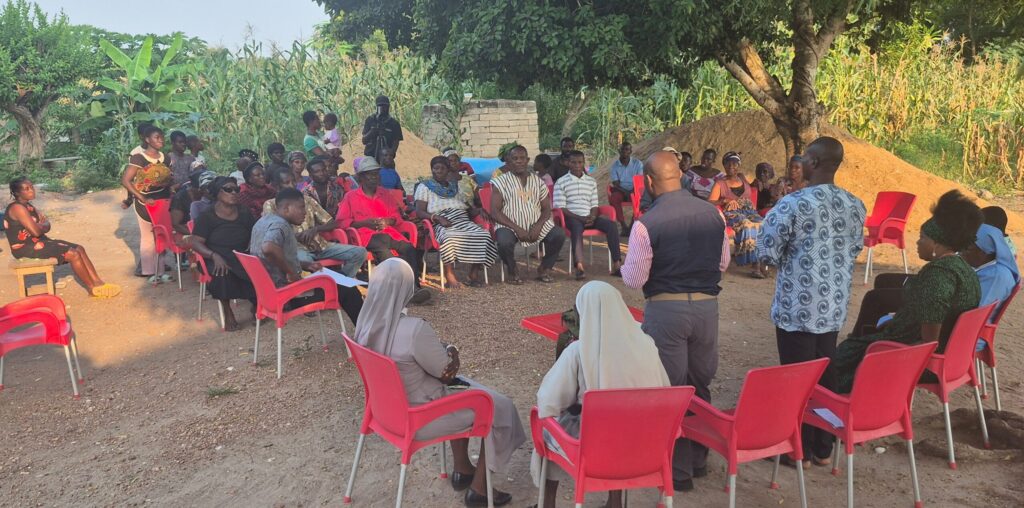
Community members gathered to evaluate the impact of previous education on land grabbing prevention, responsible investment, and the dangers of toxic dumping from agribusiness. While awareness has increased, residents reported that predatory investors continue to undermine environmental safety.
In both communities, Kop Farms was specifically mentioned for its past use of heavy chemical inputs, including fertilizers, pesticides, and herbicides, which severely polluted local streams. Although the pollution is not as visibly apparent now—due to a change in crop rotation requiring fewer chemicals—residents remain deeply worried about the long-term effects of chemical residues in both water and soil.
Community members in Morkplikpo and Kpekpo, highlighted that two streams, once relied upon for safe drinking water, remain compromised by earlier agribusiness activities. Similarly, they confirmed that despite reduced chemical use, the ecosystem continues to suffer, and livelihoods remain threatened.
Currently, Kop Farms intermittently supplies water to some of the affected communities by pumping from the Volta River into tanks. However, residents reported that this water is only provided when the company is irrigating its crops. In 2022, a company representative told AFJN at the field office that the pumping was done as a charitable act, as there was no evidence that Kop Farms had polluted the local streams. In reality, these communities—none of which leased land to Kop Farms—along with many others downstream that rely on the Kelor and Kalor streams, are the ones affected by the contamination.
Both Zomayi, Kpekpo and Morkplikpo continue to demand stronger protections from harmful agricultural practices and insist on greater government accountability to safeguard their health, environment, and right to safe water.
7. Emerging Crisis: Herder-Farmer Tensions in Ghana’s Volta Region
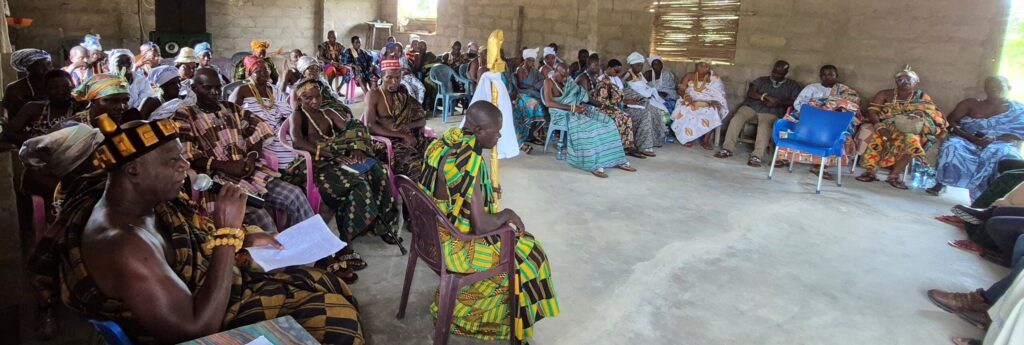
During our recent field visits across Ghana’s Volta Region, community members consistently raised urgent concerns about the growing impact of cattle herding on local livelihoods and ecosystems. Over the past three years, this has become a common theme in nearly every community we engage in. Farmers reported widespread crop destruction, contamination of rivers and streams, and unauthorized grazing on communal lands. Many pointed to individual community members’ private leasing arrangements that allow herders access to grazing areas without considering the environmental and social consequences for surrounding lands. These grievances echo early-stage patterns seen in Nigeria’s Middle Belt, where similar tensions escalated into deadly violence between Fulani herders and farming communities, and in Mali and Burkina Faso, where pastoralist disputes were later exploited by armed groups to destabilize entire regions. If Ghana fails to act swiftly — through land governance reform, environmental protections, and inclusive dialogue — it risks sliding into a cycle of conflict that has already devastated neighboring states. The warning signs are clear; the time for preventive action is now.
8. Strengthening Community Awareness and Media Outreach

To maximize impact, AFJN strategically partnered with radio stations located within the target communities to rebroadcast radio-ready, edited presentations developed from community town hall meetings on land rights and land grabbing. These broadcasts were carried out through Adanu Radio (Adaklu), Dela Radio (Adidome), Freedom FM (Sogakope), Ho FM (Ho), ANA FM (Juapong), Victory FM (Aflao), Kalewo FM (Akatsi), Denyigba Radio (Dzodze), VOV Radio (Hohoe), and Oti Radio (Dambai). This approach ensured that messaging was locally relevant, linguistically accessible, and delivered through trusted community media platforms.
By collaborating with multiple radio stations across the Volta and Oti Regions, AFJN significantly expanded public awareness and reached populations that would otherwise be difficult to engage. The radio broadcasts—typically covering an estimated 45-kilometer radius—generated strong listener engagement, including call-ins requesting additional information and invitations for AFJN to visit more communities, including cross-border outreach into Togo. This strategy demonstrably broadened AFJN’s reach, engagement, and advocacy impact.
The table below presents the estimated population reach per radio station based on the 2021 Ghana Population and Housing Census.
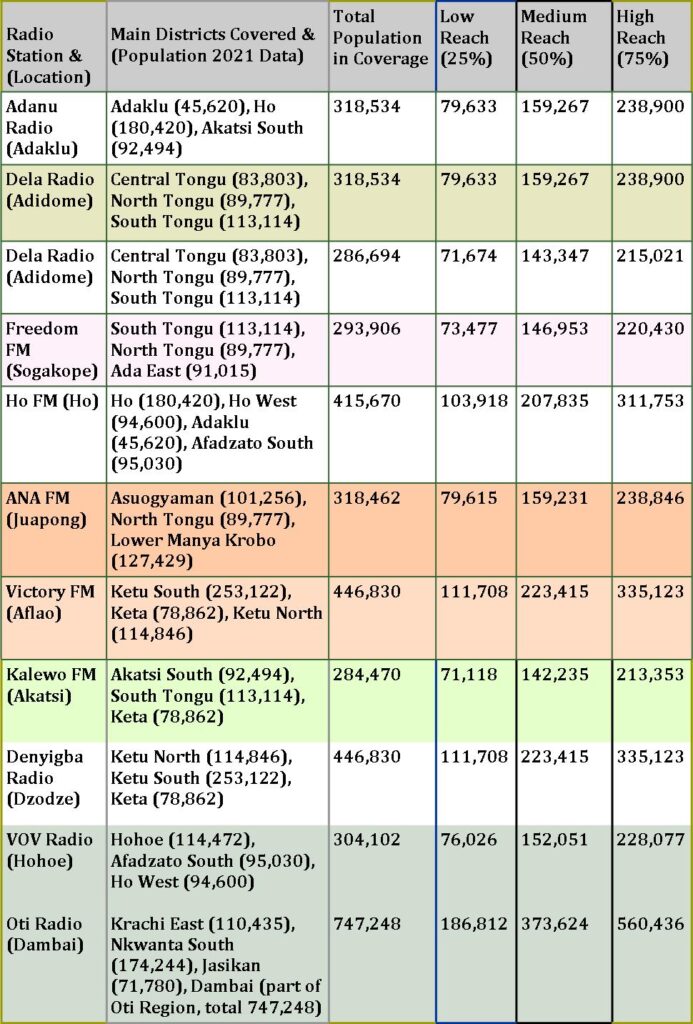
Estimated Overall Reach Scenarios (Based on 2021 Census Data): · Low (25%): approximately 1.06 million individuals · Medium (50%): approximately 2.12 million individuals · High (75%): approximately 3.18 million individuals
These estimates underscore the effectiveness of radio as a high-impact tool for community education, advocacy, and stakeholder engagement on land governance issues.
Conclusion
Land grabbing remains a serious threat to farming communities in Ghana. AFJN’s decade-long campaign has empowered chiefs, educated landowners, and helped communities resist exploitative contracts, as seen in Anfoe, Brewaniase, Kpekpo, and Morkplikpo. Communities like Zomayi continue to face compounded challenges, including water pollution from agribusiness and limited access to safe drinking water, highlighting the link between land exploitation and environmental harm.
Emerging herder-farmer tensions in the Volta Region further threaten livelihoods with crop destruction and unauthorized grazing increasing community vulnerability. If left unaddressed, these disputes could escalate, following patterns observed in neighboring countries.
The resilience of these communities demonstrates the effectiveness of education, but continuous awareness, strong governance, and preventive measures are essential. AFJN will continue advocacy and support to ensure that development promotes justice, environmental protection, and sustainable prosperity rather than exploitation.
Project Implemented by:
Nana Tidibo Kowura Odamba ii Paramount Chief Ntrubo Traditional Council (Brewaniase)
Zikpuigator kwaku Godson Amekah, Paramount stoolfather Dorfor Traditional Area
Torgbui Bosoka iii Dufia of Agbalevi , Agortime Ziope District
Mamaa Alorvi Makpeza II , Queenmother Agorveme Dorfor
Mr. Steven Rogers, Executive Director, AFJN -USA
Mr. Nyamedi Kwaku Mawunyega Charles. Journalist
Mr. Ntama Bahati, Policy Analyst, AFJN-USA
Sr. Naomi Addai, HHCJ, AFJN Ghana
Sr. Catherine Gah, SIJ, AFJN Ghana
Mr. Johannes Kifibi , AFJN Ghana
Sr. Ignatia Safowaa Buaben, HHCJ
Fr. Daniel Osei Yeboh, C.SSp
Sr. Felicia Nyantakyi is SIJ
Mr. Moses Kobla Akpalu
Funding of this project came from these organizations:
Raskob Foundation for Catholic Activities
Sisters of the Holy Cross
To Support our Mission contact:
Mr. Steven Nabieu Rogers, PhD , Executive Director, Email director@afjn.org Mr. Jacques Bahati, Policy Analyst, Email: bahati@afjn.org Tel 202-817-3670