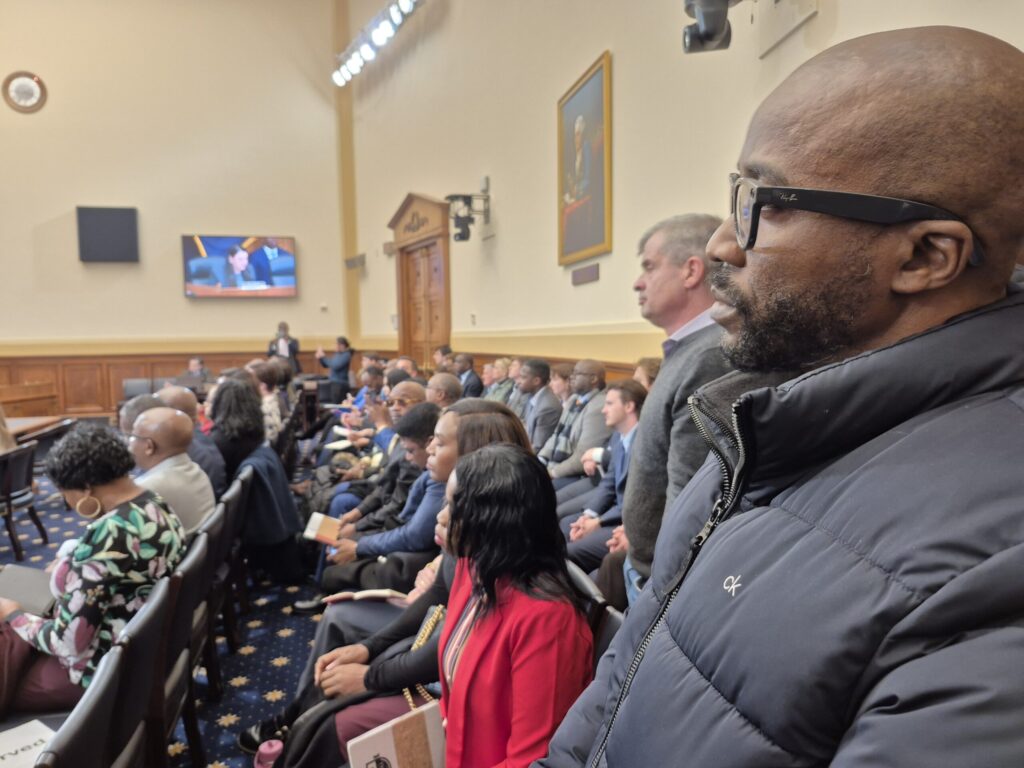
On January 20, 2026, Africa Faith and Justice Network (AFJN), in partnership with DR CONGO FORWARD, submitted a formal Statement for the Record to the US House Committee on Foreign Affairs, Subcommittee on Africa, in advance of the January 22, 2026 hearing on US engagement in the Great Lakes region. This statement challenges approaches to peace that prioritize short-term political agreements without addressing accountability for mass atrocities, foreign military intervention, and illicit resource exploitation. Below is the statement.
Download the statement here in pdf file
January 20, 2026
United States House of Representatives
Committee on Foreign Affairs
Subcommittee on Africa
STATEMENT FOR THE RECORD
Justice, Sovereignty, and Accountability as Preconditions for Sustainable Peace in the Democratic Republic of Congo
Chairman Smith, Ranking Member Jacobs and Distinguished Members of the Subcommittee,
Africa Faith and Justice Network (AFJN) and DR CONGO FORWARD respectfully submits this statement for the record in connection with the Subcommittee hearing on “Advancing Peace in DRC and Rwanda Through President Trump’s Washington Accords.” on January 22, 2026
While the Washington Accords represent an important diplomatic effort, experience in the Democratic Republic of Congo demonstrates that dialogue without accountability cannot sustain peace. For over three decades, ceasefires and power-sharing arrangements without justice have enabled re-armament, territorial occupation, and mass atrocities against civilians.
The crisis in the DRC is not primarily an internal political dispute. It is driven by external military aggression, proxy armed groups, illicit resource exploitation, and systematic impunity, all extensively documented by United Nations mechanisms. For the Washington Accords to succeed, U.S. policy should prioritize strict application of international law, civilian protection, and respect for Congolese sovereignty.
I. The Limits of “Internal Dialogue” and the Integrity of the Congolese State
Calls for an “internal Congolese dialogue” misdiagnose the nature of the conflict. Such framing assumes that violence stems from domestic political exclusion alone, when in fact external infiltration of state institutions and proxy warfare are central drivers of the conflict.
Successive UN Group of Experts reports (2012–2024) document how previous “integration” processes—absorbing armed groups into the FARDC—have repeatedly inserted Congolese and Rwanda-aligned personnel into the Congolese institutions including security services, compromising good governance, command structures, intelligence, and battlefield effectiveness.¹ These arrangements have weakened, rather than strengthened, the Congolese state.
Congolese resistance to renewed dialogue is therefore not a rejection of peace, but a rejection of institutional capture and a demand for sovereignty, accountability, and the restoration of legitimate state authority. The United States should not support processes that reinstate compromised actors into the army or government. Instead, U.S. engagement should support professionalization, vetting, and civilian oversight of security institutions, consistent with international norms.
II. Justice and the Anti-Genocide Imperative
Durable peace is impossible without justice. The 2010 UN Office of the High Commissioner for Human Rights (OHCHR) Mapping Report documents 617 serious incidents committed between 1993 and 2003 and concludes that crimes committed by the Rwandan Patriotic Army (RPA) which is now the Rwandan Defence Force (RDF) and allied forces against Hutu refugees and Congolese civilians could constitute acts of genocide if adjudicated by a competent court.² Fifteen years later, no judicial mechanism has been established.
More recently, the UN Joint Human Rights Office confirmed that at least 171 civilians were executed in Kishishe in November 2022 by M23 forces.³ Survivors and civil society organizations report patterns of killing—blunt-force trauma, bound victims, burning of homes— that mirror genocidal methodologies.
Under the Genocide Convention Implementation Act of 1987 (18 U.S.C. §1091), the United States possesses clear legal authority to act when credible evidence of genocidal acts emerges. Failure to pursue accountability risks normalizing impunity.
III. Border Revisionism, Expansionist Ideology, and the Risk of Balkanization
The conflict in eastern DRC is not solely a security crisis; it is also driven by an ideology of territorial expansion and border revisionism that threatens regional stability. Public statements by President Paul Kagame questioning colonial borders, including remarks delivered in Benin in April 2023, and the claim by President Yoweri Museveni during the December 2025 Annual Thanksgiving Service saying that Babusese which is in Ituri province of the DRC was part of Bunyoro in Uganda, are not isolated rhetorical incidents. They reflect a pattern that undermines the principle of territorial integrity enshrined in the UN Charter and the African Union Constitutive Act.
This threat has long been recognized. Diplomatic archives and intelligence discussions dating back to the late 1990s reference deliberations among regional actors concerning the creation of a transnational political entity in the Great Lakes region, sometimes described as a “Hima-Tutsi Empire.” These ambitions align with longstanding Congolese fears of “Balkanization”—the fragmentation of the DRC to facilitate external control over land, populations, and natural resources.
In this context, refugees have increasingly been instrumentalized. Rather than facilitating voluntary and dignified repatriation, refugee populations—particularly the Banyamulenge—are invoked to justify military intervention, land occupation, and proxy warfare. Such practices violate international refugee law and deepen regional instability.
IV. Documented Abuses: Forced Recruitment and Beatings, and Digital Evidence
We are gravely concerned by credible video and photographic evidence circulating on social media depicting:
- Beatings of Congolese civilians by members of the Rwandan Defence Force (RDF) and M23/AFC fighters
- Forced recruitment of civilians, including
- Public humiliation and abuse of non-combatants in occupied territory
These materials corroborate findings of the UN Group of Experts documenting forced conscription, child recruitment, and systematic intimidation of civilian populations.⁴ These acts constitute grave breaches of international humanitarian law and must cease immediately.
V. M23 as a Proxy Armed Group and the Case for Terrorist Designation
The M23/AFC armed group is not an indigenous insurgency, it is better understood as a Rwandan-backed, regionally embedded rebel coalition. The 2024 UN Group of Experts report establishes direct RDF command, logistical support, and operational coordination.⁵
Given M23’s systematic targeting of civilians, forced recruitment (including of children), and territorial control through violence, we urge the Administration to designate M23/AFC as a Foreign Terrorist Organization. Such designation would enable U.S. law enforcement to disrupt financing networks, including those operating within the United States, and send a clear signal that proxy warfare will not be tolerated.
VI. Recommendations for Congress
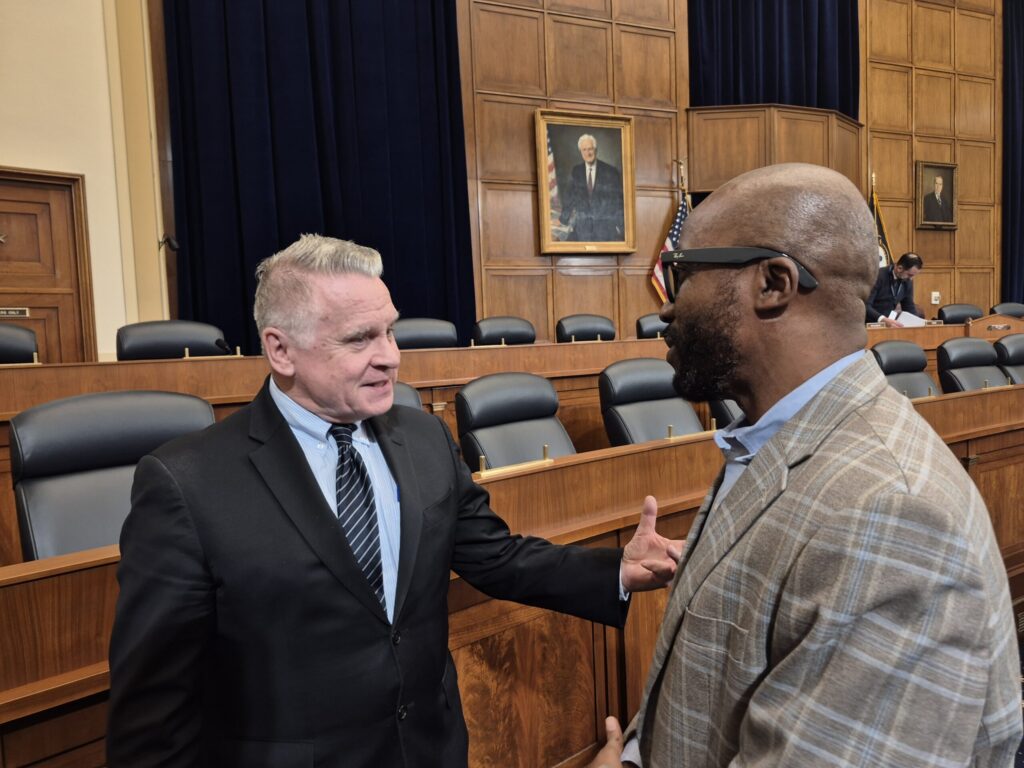
We respectfully urge the US Administration and the Congress to:
- Support the establishment of an international or hybrid judicial mechanism with jurisdiction to investigate and prosecute war crimes, crimes against humanity, and acts of genocide committed in the DRC from the period covered by the UN Mapping Report through the present day, ensuring no temporal gaps in accountability.
- Urge the Administration to apply targeted sanctions under the Global Magnitsky Human Rights Accountability Act against foreign officials and armed group leaders credibly implicated in atrocities, forced recruitment, and pillage.
- Recommend designation of M23/AFC as a Foreign Terrorist Organization, based on documented patterns of violence against civilians and child recruitment.
- Reject diplomatic pressure for “internal dialogue” processes that compel the DRC to reintegrate armed group leaders or foreign-aligned actors into state institutions.
- Review Rwanda’s role in United Nations peacekeeping operations and call for Rwanda’s removal from UN peacekeeping missions, given UN-documented involvement in attacks against UN peacekeepers and support to armed proxies in the DRC.
- Condition U.S. security cooperation on verifiable withdrawal of foreign forces from Congolese territory and cessation of support to proxy armed groups.
- Request a briefing by the state Department on regional border revisionism and risks to the territorial integrity of the Democratic Republic of Congo and US interest in the DRC.
The Democratic Republic of Congo does not suffer from a lack of dialogue; it suffers from a lack of justice. Peace without accountability has repeatedly failed. The United States now faces a defining choice: whether the Washington Accords become another instance in which violations go unaddressed—undermining U.S. diplomatic credibility—or a genuine turning point toward law, sovereignty, and dignity for millions of Congolese civilians.
We urge Congress to ensure that U.S. engagement reflects not only diplomatic expediency, but international law, moral responsibility, and the protection of human life.
Respectfully submitted,
Africa Faith and Justice Network
Steven Nabieu Rogers, PhD
Executive Director
DR CONGO FORWARD
Jacques Mushagasha
President
Notes
¹ UN Group of Experts on the DRC, Final Reports (2012–2024).
² OHCHR, Democratic Republic of the Congo: Mapping Human Rights Violations 1993–2003 (2010).
³ UN Joint Human Rights Office, Investigation into the Kishishe Massacre (2023). ⁴ UN Group of Experts, S/2024/432.
⁵ Ibid.
End
About the Organizations
The Africa Faith and Justice Network (AFJN) is a community of advocates for responsible United States (US) relations with Africa. AFJN stresses issues of peace building, human rights, and social justice that tie directly into Catholic Social Teaching. AFJN works closely with Catholic missionary congregations and numerous Africa-focused coalitions of all persuasions to advocate for US economic and political policies that will benefit Africa’s poor majority, facilitate an end to armed conflict, establish equitable trade and investment with Africa and promote sustainable development. AFJN engages members of both the Legislative and Executive Branches of the US Government, African Diplomatic Corps, religious leaders, and the US public on various important issues affecting Africans to advance our message of social justice.
AFJN acts as a voice to inform and motivate people to take action in their local communities and internationally. We work closely with many constituents on the ground all over Africa as well as with individuals and congregations in the US. We are also registered as a UN-DPI organization at the United Nations.
DR CONGO FORWARD is a Congolese-led advocacy and policy platform advancing justice, sovereignty, and accountability in the Democratic Republic of Congo. Centering survivors and affected communities, the initiative engages policymakers and international institutions to promote peace efforts rooted in international law and Congolese leadership.