Download the report in pdf file here
Introduction
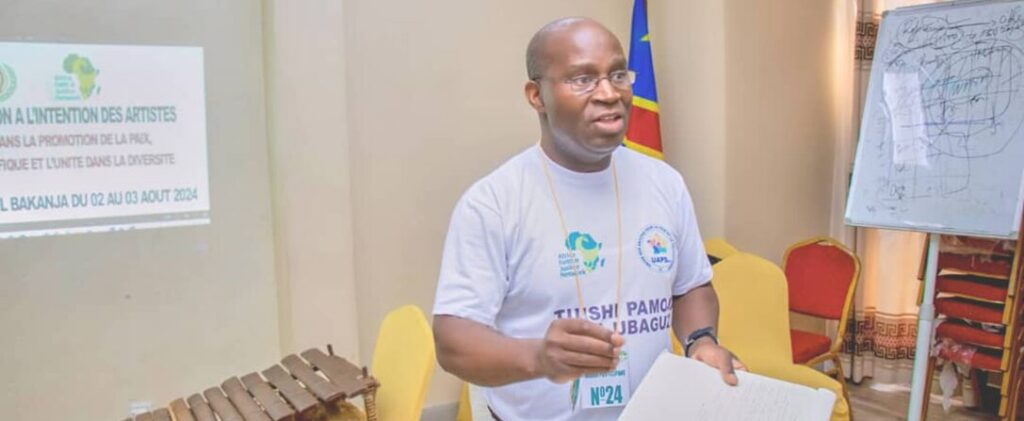
The Unity Through Diversity program, initiated by AFJN, seeks to promote peaceful coexistence between ethnic groups in the Democratic Republic of Congo (DRC). The project specifically focuses on peacebuilding, conflict prevention, reconciliation, social cohesion, and the rebuilding of communities that have been torn apart by more than 30 years of war.
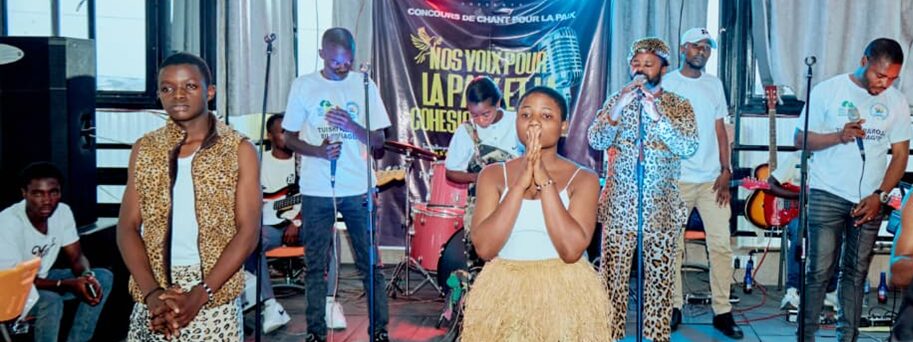
Recognizing the destructive role of ethnic discrimination, hate speech, and exclusion—whether economic, administrative, or political—AFJN’s program uses music as a vehicle for consistent awareness, education, and accessible messaging. Music transcends boundaries and is deeply rooted in Congolese culture, making it a powerful medium for fostering resilience, healing, and unity. Because music is one of the most effective and widely used tools in society—employed in advertising, national anthems, and identity building—it is both fitting and strategic that AFJN has embraced it as a preferred instrument for peacebuilding.
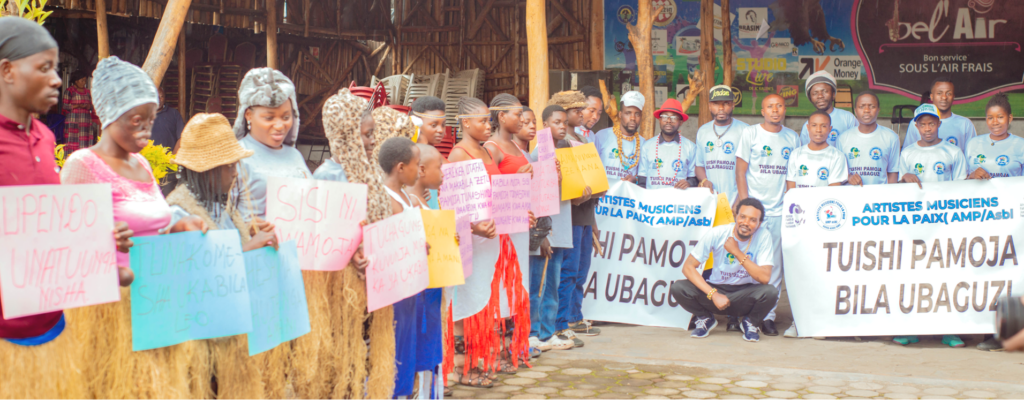
This project is aligned with the work of the United Nations, the DRC government, and civil society organizations that are actively striving to criminalize hate speech and strengthen laws promoting national unity. The call to uphold the diversity of ethnicities in the DRC is also consistently reiterated and included in all peace negotiation texts and peace plans, underscoring its importance for reconciliation and stability. Building on this foundation, Africa Faith and Justice Network (AFJN) stands at the forefront with a clear and uncompromising commitment to unity through diversity, demonstrating leadership, focus, and vision in driving this essential work forward.
Context and Rationale
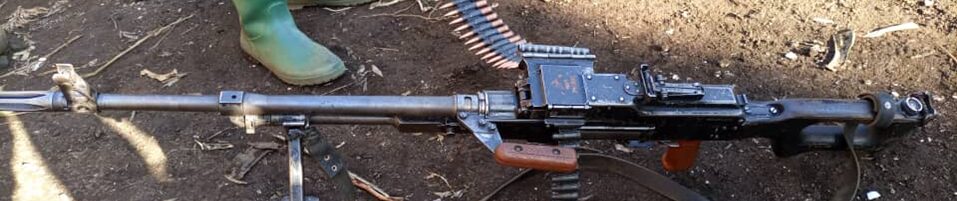
For decades, the DRC has witnessed ethnic based violence perpetrated by armed groups, and individuals. Discrimination is not only violent but also structural: denial of employment and opportunities based on ethnicity has left lasting economic scars across generations. This marginalization has fueled grievances that, in some cases, have escalated into armed conflict.
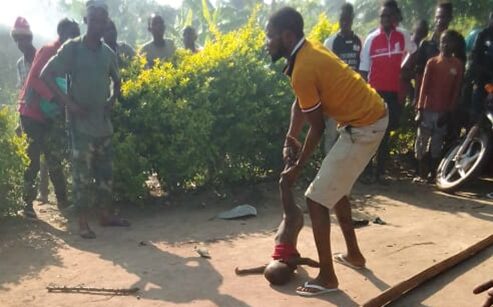
The breakdown of traditional community life—where neighbors once shared daily essentials without regard to ethnicity—has deeply fractured the social fabric. Restoring these bonds is at the heart of our mission. Our initiative aligns with this broader framework, providing grassroots action that complements policy commitments and peace negotiations. The Congolese Constitution (Article 11 and Article 60) guarantees equality and prohibits discrimination, tribalism, and incitement to mass killing, though enforcement remains weak. President Félix Tshisekedi has publicly denounced tribalism and pledged to promote unity. The Congolese government and parliament have recently advanced legislation to protect indigenous peoples and strengthen safeguards against tribalism. The United Nations mission in DRC and international human rights organizations (Amnesty International and Human Rights Watch,) consistently call for an end to hate speech and incitement.
Program Activities
Project Background
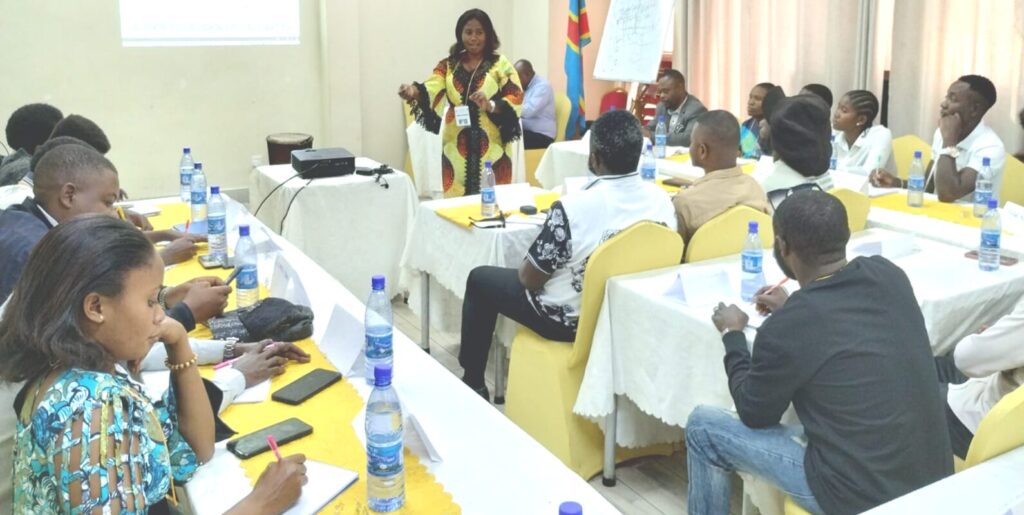
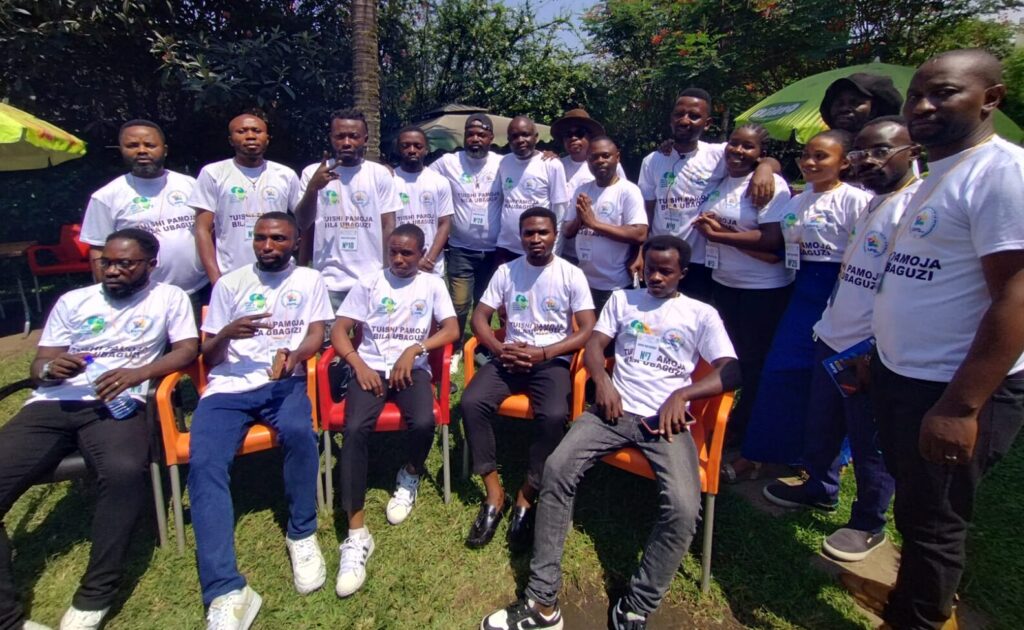
The program began in 2024 by bringing together 30 musicians in a seminar in the city of Goma designed to sensitize them to their role as agents of peace. Recognizing that music can spread either hate or love or buildpeace or incite violence, these artists chose to unite under the banner of “Artistes Musiciens Pour la Paix (Music Artists for Peace),” a national platform legally recognized for peacebuilding through music. Public concerts and a peace caravan in Goma and surrounding areas have drawn hundreds of participants. Videos documenting these events continue to gain hundreds of views online, amplifying the reach of the message beyond the physical gatherings.
Children’s Voices for Peace Contest
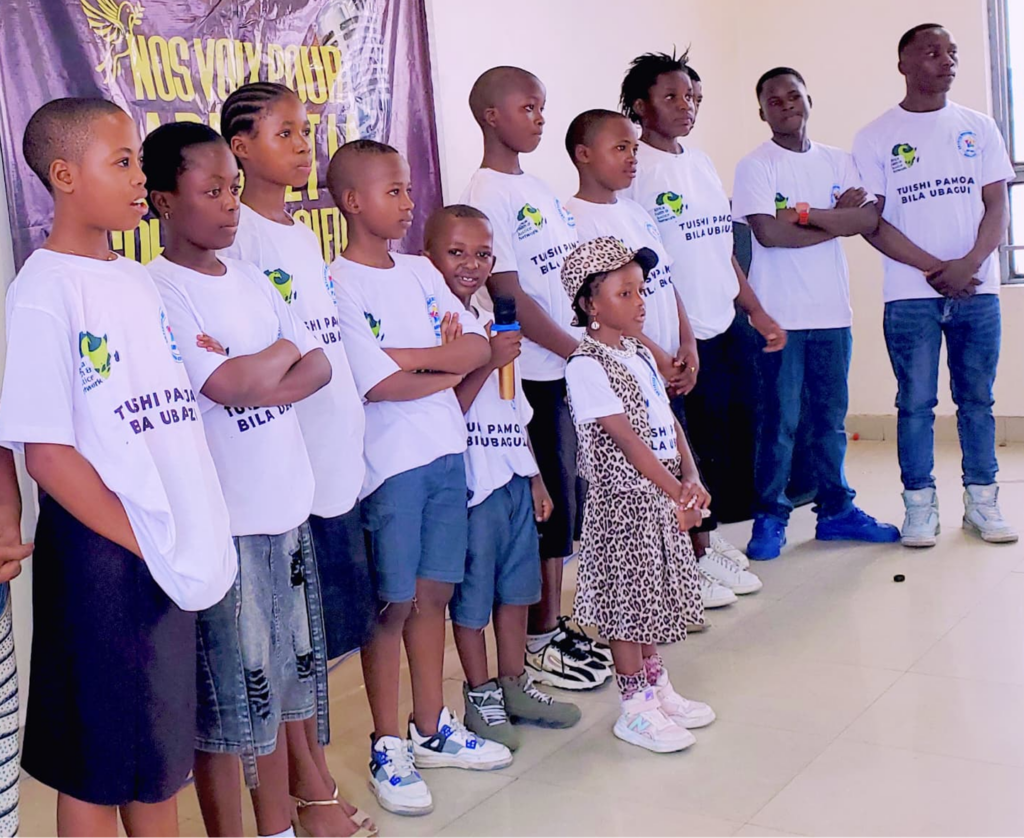
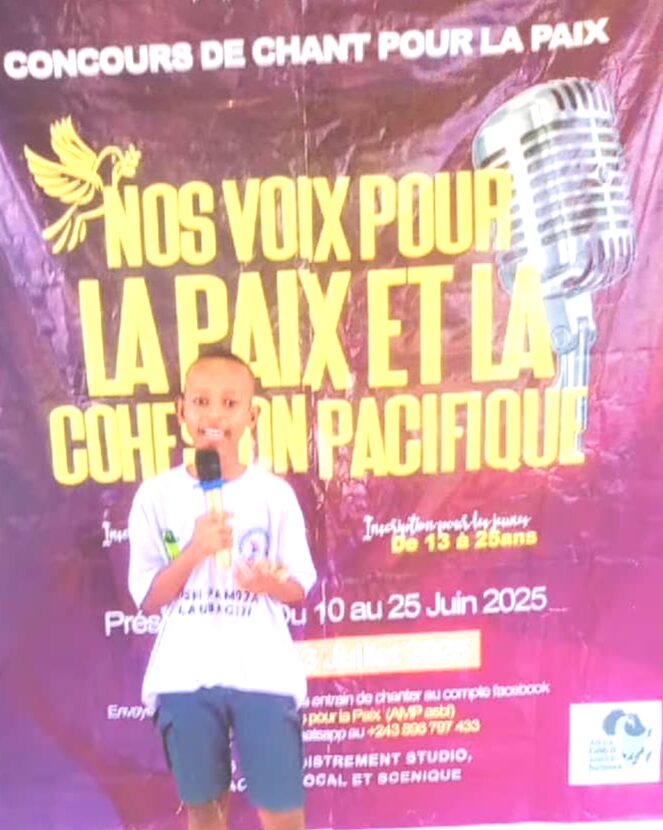
In its second year, the program expanded by introducing the Children’s Voices for Peace Contest, which engaged children and youth between the ages of 5 and 17. The contest invited musical entries, and children submitted short video performances. On the International Day of Peace, we organized a pre-selection event and chose fifteen finalists. Renowned musicians joined the celebration of the launch of the children’s version of our peace anthem, “Let Us Live Together Without Tribalism.” During the final contest, we awarded prizes to the winners and presented certificates to all participants, who also accepted the role of Youth Ambassadors for Peace. Contestants recorded their songs in a professional studio, and these recordings quickly turned into community “hits” played in markets, at events, and on local radio stations.
Faith-Based Outreach and Chaplaincy
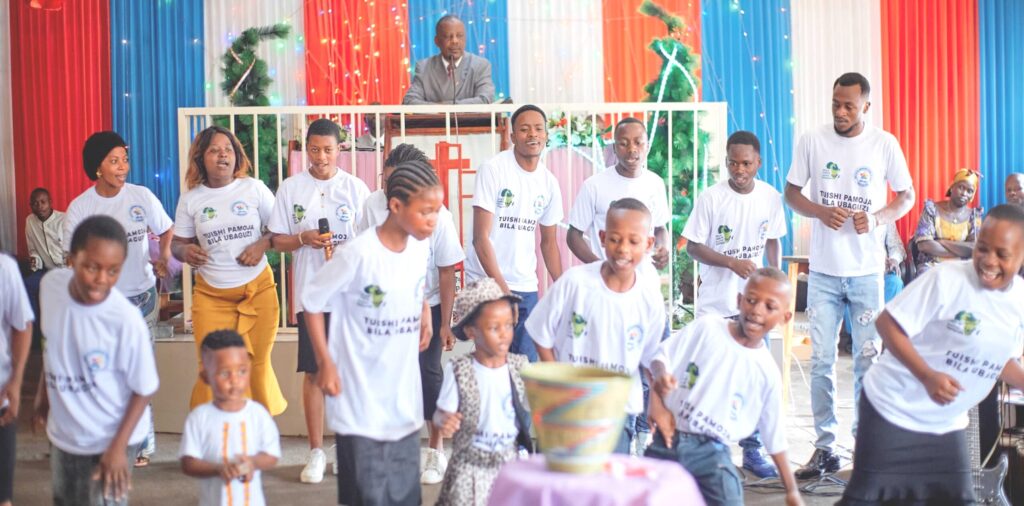
Recognizing the central role of churches in community life, the project engaged faith communities as key partners in spreading the message of peace. Children’s versions of our peace anthem, along with other songs performed by youth, were incorporated into worship services. These initiatives not only carried the message of peace into congregations but also offered emotional support and trauma healing for war-affected communities. Many of the musicians themselves—survivors of violence and loss—have embraced the role of “wounded healers,” transforming their own pain into hope for others.
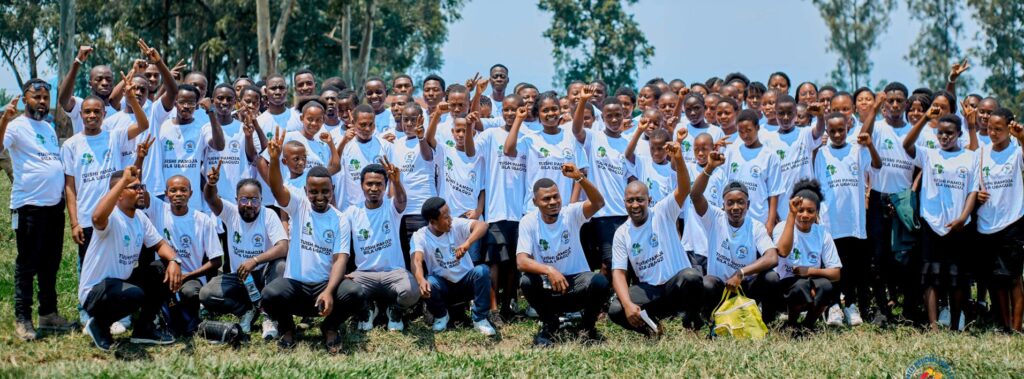
On August 30, we partnered with Saint Aloyse Catholic Church in Rutshuru to host a parish-wide concert featuring 13 youth choirs, bringing together nearly 1,000 singers in a powerful celebration of peace and unity. On the International Day of Music (September 21), the parish outstations of Rubare organized peace-themed Masses where choirs wore specially printed t-shirts bearing the message “Let us live together without tribalism.” This initiative aligned with the Congolese Bishops Conference’s peace message, which was read during Mass. Additionally, five Protestant churches opened their doors to welcome the peace message, inviting children to sing during regular gatherings. In these settings, the voices of children—innocent yet powerful messengers of peace—moved hearts and inspired minds, reminding communities of the possibility of reconciliation and coexistence.
Welcomed Message of Peace and Unity through the Power of Music
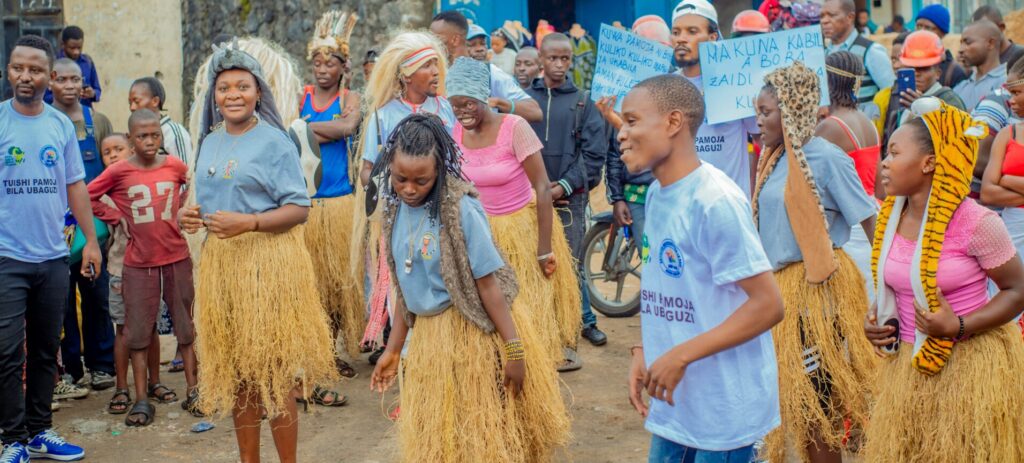
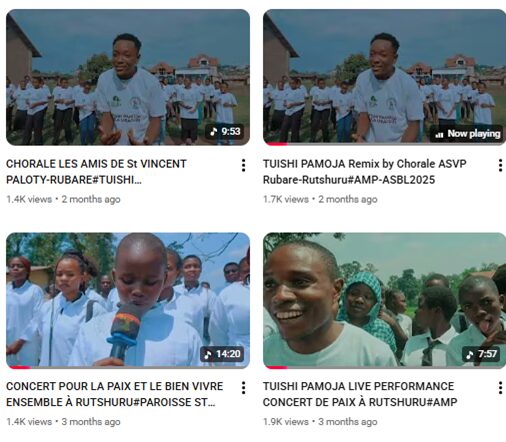
Newly recorded children’s songs have gained popularity in local communities, becoming daily reminders of unity and reconciliation. These songs, carried by the innocent voices of children, have become powerful tools for inspiring change and healing. Music is widely becoming a bridge across divides, enabling members of formerly divided communities to reconnect and strengthen social cohesion.
Videos of caravans and concerts have reached thousands of viewers online, giving the initiative visibility beyond the immediate communities and extending the message of peace to a wider audience.
Original Songs of Peace and Unity by Children Peace Ambassadors
The voices of children rise as a gentle but powerful force. Through their songs, they remind us of love, unity, forgiveness, and the bonds that make us one family. These original songs sung by children carry messages that speak directly to hearts—calling for an end to war, tribalism, and division, and inspiring hope for peace.
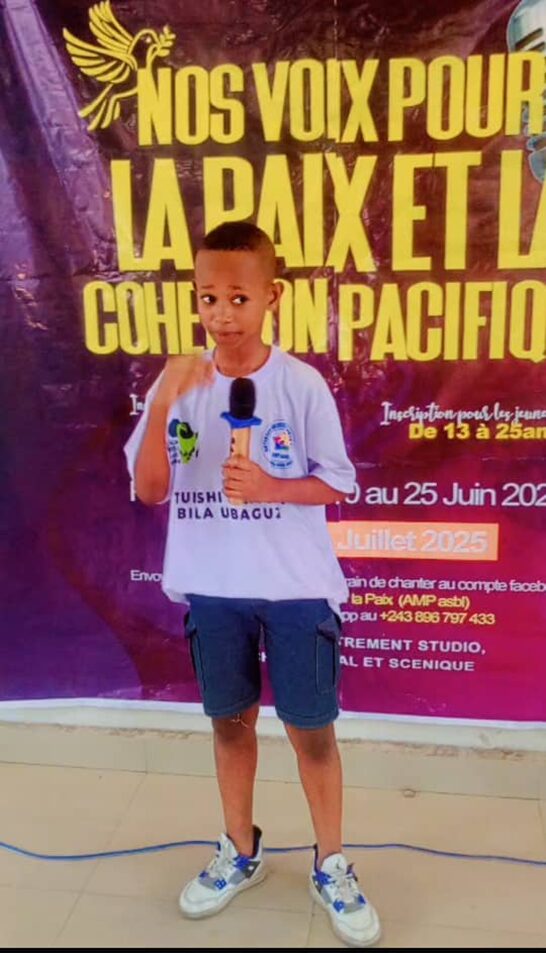
“We are Siblings”
Sung By: Stevenson
Where has love gone?
Our ancestors once lived in love.
Where has unity gone?
They lived together as one.
Love is the pillar of peace.
Unity is the foundation of harmony.
Love—and let me love you.
A neighbor is a relative. Refrain: We are siblings,
Even if we speak different languages.
Even if we come from different places.
Even if we belong to different ethnicities—
We are still one family.
The greatest commandment God gave us is love.
How can you love God,
If you do not love the neighbor you see?
We are one.
We share the same blood.
We are children of one Father.
Let us not hate each other.
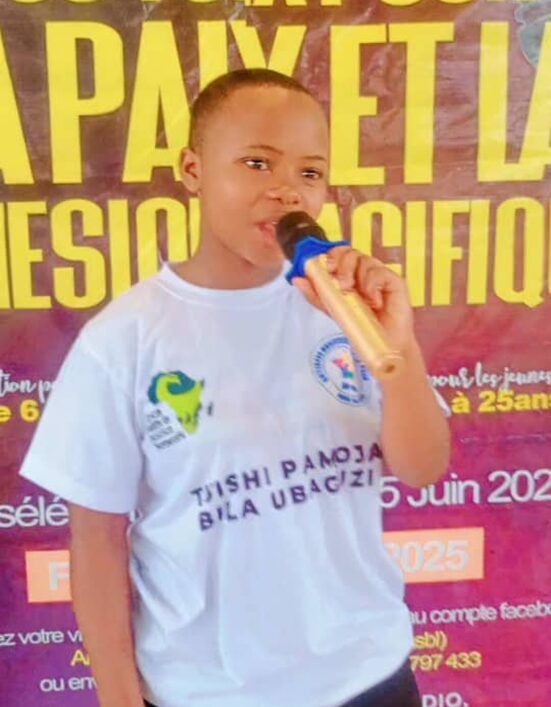
“Let Us Love Each Other”
Sung By: Prefna
Why has love grown cold between us?
Why has kindness disappeared?
Why do we discriminate?
And kill each other,
Though we are all children of the same Father?
Let us end war.
Let us end arrogance.
What unites us is far greater than what divides us.
Let us love one another – Because we are one.
“I Am Sorry, My Friends”
Sung By: Irumva
I am sorry, My friends, I am truly sorry.
Why has tribalism succeeded in dividing us?
Why has regionalism torn us apart?
Why has our beautiful linguistic diversity become a wall between us?
Back then, in the struggle for independence,
We stood together –
Morning, noon, and night.
Muluba, Mukongo, Muswahili, Mungala—
We were united.
It was through unity that we won our freedom.
But today, tribalism has weakened us.
Today, war has torn us apart.
No, no to war!
Stop, stop tribalism!
“
Unity Through Diversity: A Scalable Model for Peace
The Unity Through Diversity project has proven to be a timely, innovative, and impactful initiative in one of the most conflict-affected regions of the Democratic Republic of Congo. By using music as a tool for peacebuilding, AFJN and its local partners are helping restore hope, rebuild community bonds, and foster reconciliation in contexts deeply fractured by decades of violence. This model, which harnesses the power of music and youth engagement, is highly scalable and can be adapted to other communities and regions as an effective tool for promoting peace and social cohesion.
Out of the initial launch of the Unity Through Diversity project, our partner organization, Music Artists for Peace, was born. It has the potential to grow into a national movement for reconciliation, showcasing how this model can inspire broader societal change. Looking ahead, the project will continue to strengthen youth engagement, ensuring that the next generation is firmly rooted in values of peace and coexistence.
In a country where war has too often been fueled by ethnic hatred, Unity Through Diversity offers a counter-narrative of healing, resilience, and togetherness—a message that is both urgent and widely embraced.