From Dialogue to Action: AFJN Advances Accountability in Sierra Leone’s Mining Sector
Thursday, September 24, 2026
by Steven Nabieu Rogers
Posted in AFJN Articles, Featured, Focus Campaigns, Just Governance, News, Staff Interns
Tagged in Just Governance, Sierra Leone, Steven Rogers
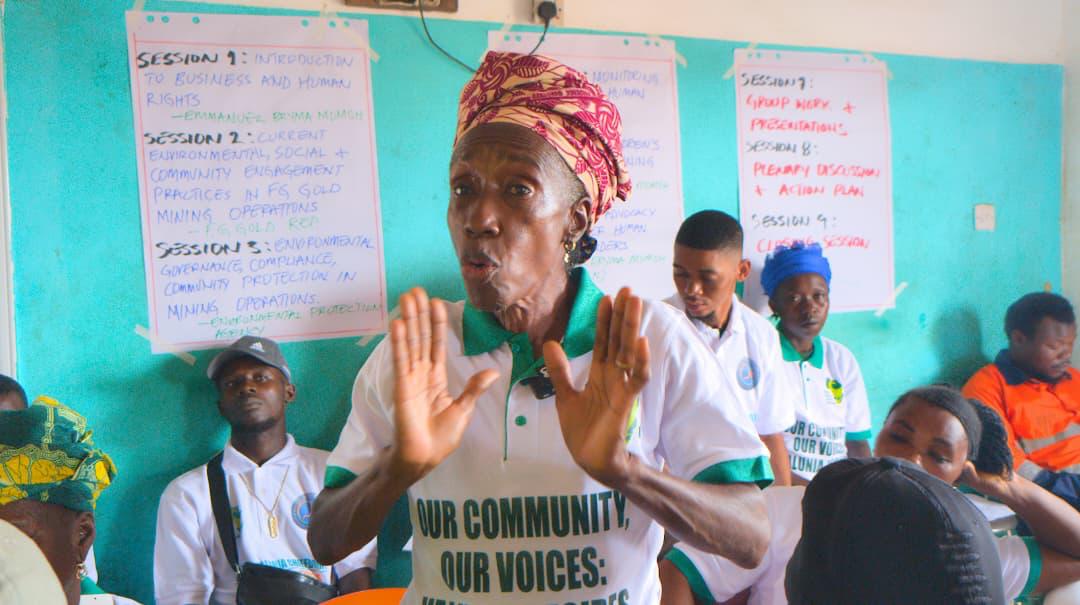
AFJN brings affected communities, FG Gold representatives, civil society and environmental authorities together for a Business and Human Rights training in Baomahun, Sierra Leone.
In September 2026, the Africa Faith and Justice Network (AFJN) convened representatives of civil society organizations, landholding families, women’s groups, human rights defenders, community activists and three representatives of FG Gold for a Business and Human Rights training in Baomahun, Valunia Chiefdom.
Held under the theme “Human Rights: The Foundation of Sustainable Business,” the training reflected the growing impact of AFJN’s sustained engagement. What began as outreach and advocacy is developing into a dialogue in which residents can raise concerns directly, company representatives can respond, and stakeholders can pursue practical solutions.
Building Trust Through Sustained Engagement
Following two years of community outreach, AFJN convened a historic meeting in October 2025, bringing FG Gold together with more than 800 residents and stakeholders. Community members raised concerns about land compensation, employment, water quality, damaged roads, access to information and the distribution of mining benefits.
The meeting created a rare space for residents to present their experiences directly to the company. It also led to proposals for a Joint Community–Company Dialogue Committee, a Community Action Plan, environmental monitoring and stronger grievance processes.
In April 2026, AFJN followed up by examining community-development initiatives reported by FG Gold during a government inspection. AFJN welcomed reported investments in infrastructure, livelihoods and local employment while emphasizing that these commitments must produce measurable improvements for affected communities. Read AFJN’s April 2026 update.
The September training advanced this work by equipping local stakeholders to monitor commitments, document impacts and pursue appropriate remedies.
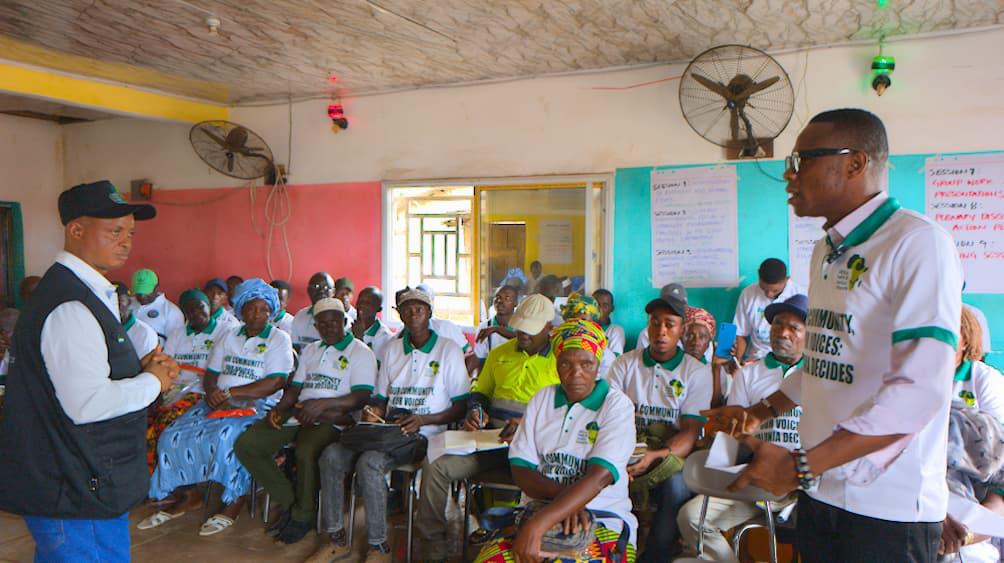
Community representatives strengthen their knowledge of human rights monitoring, documentation and evidence-based advocacy.
An Emerging Community–Company Dialogue
The participation of three FG Gold representatives was particularly significant. Their presence demonstrated the company’s willingness to remain engaged, listen to difficult concerns and participate in a process centered on human rights and community accountability.
Company representatives and community members received the same training on the United Nations Guiding Principles on Business and Human Rights, human rights due diligence, environmental governance, children’s rights, grievance mechanisms and access to remedy.
FG Gold’s participation does not mean that every concern has been resolved. It does, however, provide an important foundation for shared understanding and accountability.
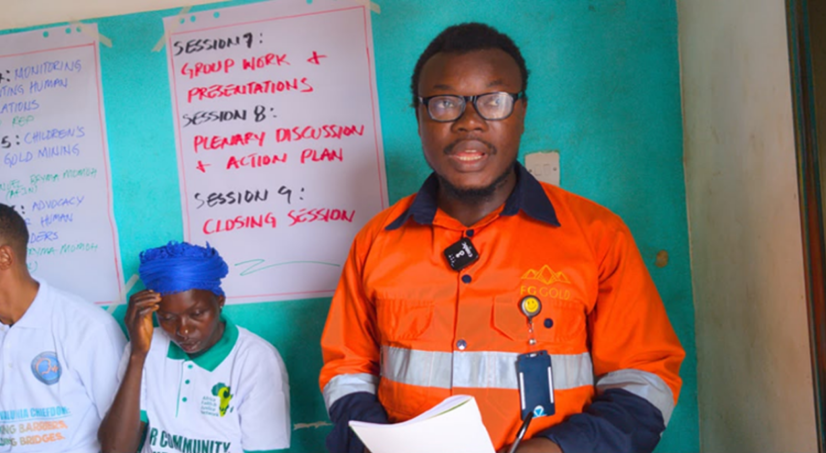
“AFJN’s convening role is vital for creating a trusted space for constructive dialogue and practical solutions between affected communities and FG Gold.”
– FG Gold representative
This acknowledgment highlights one of AFJN’s most important contributions: creating a credible space where communities can speak openly, the company can hear concerns firsthand, and both sides can explore solutions without avoiding questions of responsibility.
Strengthening Community Capacity
Participants strengthened their skills in human rights monitoring, documentation, evidence-based advocacy and stakeholder engagement. These tools will help community actors move from describing problems to gathering credible evidence and engaging companies and government institutions more effectively.
A particularly positive development was AFJN’s inclusion of Sierra Leone’s Environmental Protection Agency in the training. The agency explained the community’s role in the Environmental Impact Assessment process and FG Gold’s continuing responsibility to comply with environmental requirements. This helped participants understand that communities are not merely observers: they can contribute local evidence, report environmental changes and monitor whether agreed safeguards are being followed. With this knowledge, residents can become informed community watchdogs for the protection of their land, water and health.
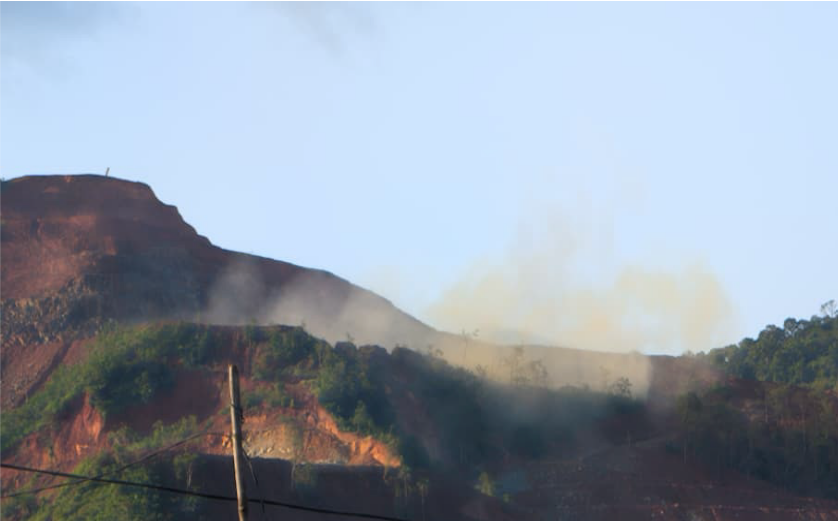
A cloud of dust rises over Baomahun following blasting near the mountain that serves as a landmark for the community. Residents have raised concerns about possible effects on air quality and public health.
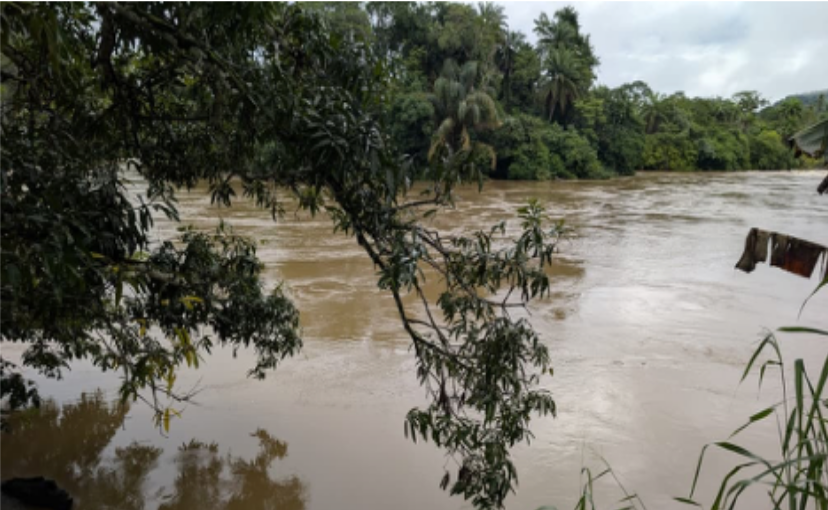
River Teyai (known locally as ‘the Black River’). Residents have raised concerns about changes in the water’s color and level and their possible effects on fishing, livelihoods and community health.
Community members called for meaningful consultation before decisions affecting their land, environment and future are made. They also urged more accessible and responsive grievance mechanisms, with greater protection for children, community health and human rights defenders.
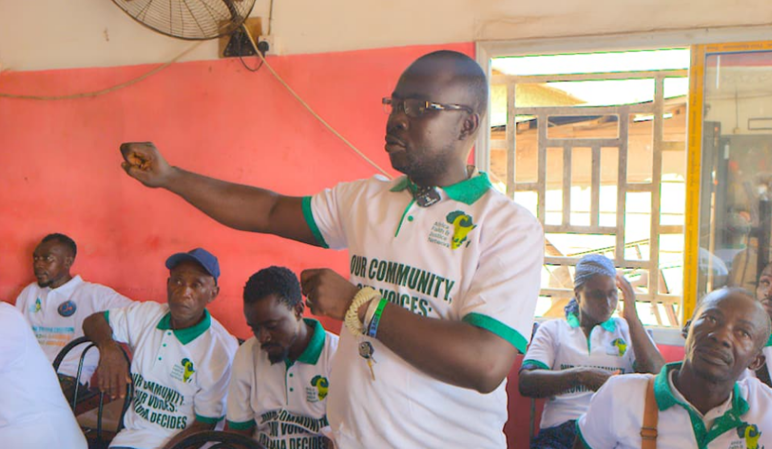
“We live with the impacts of mining, yet we were never adequately consulted or informed about its effects on our land and environment.”— Landholding representative, Valunia Chiefdom
Turning Dialogue into Accountability
AFJN’s sustained engagement—from community outreach and the 2025 town hall to follow-up advocacy and the September 2026 training—is helping create the space and tools for coordinated action. Community members are using that space to raise their concerns, strengthen their knowledge and define the accountability measures they expect from FG Gold and public authorities.
As a concrete next step, participants recommended installing a symbolic signboard by the end of 2026. The initiative would bring together affected communities, AFJN, FG Gold, local traditional leaders and political representatives in a visible commitment to place the community at the heart of mining activities, respect its rights and dignity, and ensure that FG Gold fulfills its corporate and community-safeguard responsibilities.
AFJN is helping convene and strengthen this process, but the people of Baomahun are driving it forward. By organizing, documenting environmental and human rights concerns, monitoring commitments and insisting on a voice in decisions affecting their future, the community is transforming dialogue into local action—and establishing itself as a powerful agent of accountability.