Food Sovereignty
Since 2000, tens of millions of hectares of African land have been acquired by foreign investors and large-scale commercial interests, often displacing smallholder farmers and prioritizing export crops, extractive industries, and speculative investment over local food production. As a result, more than 300 million Africans face food insecurity despite Africa's vast agricultural potential. Weak land governance and the exclusion of women and youth from land and food decision-making continue to undermine local food systems, deepen food insecurity, and threaten the livelihoods of farming communities.
AFJN's Food Sovereignty Program, part of our Just Governance initiative, works to ensure that African communities have the right to control their land, food systems, and natural resources. We believe lasting food security begins with secure land rights, accountable governance, and community-led agricultural development.
Since 2014, AFJN has partnered with local communities, faith leaders, civil society organizations, and policymakers to strengthen land rights, promote transparency, and prevent exploitative land deals. Through land rights education, community-based land monitoring, and policy advocacy, we help communities protect their resources and shape decisions that affect their future.
AFJN also supports agroecology and sustainable agriculture by collaborating with local partners to support farmer-managed seed systems, climate-resilient farming practices, and other locally driven solutions that improve food production while protecting the environment. Women—including Catholic sisters—and young people are central to this work, serving as leaders and advocates for equitable land governance and resilient food systems.
By connecting grassroots action with national and regional advocacy, AFJN continues to support local partners and communities to help build transparent land governance, stronger food systems, and lasting food sovereignty across Africa.
Land Grabbing Prevention

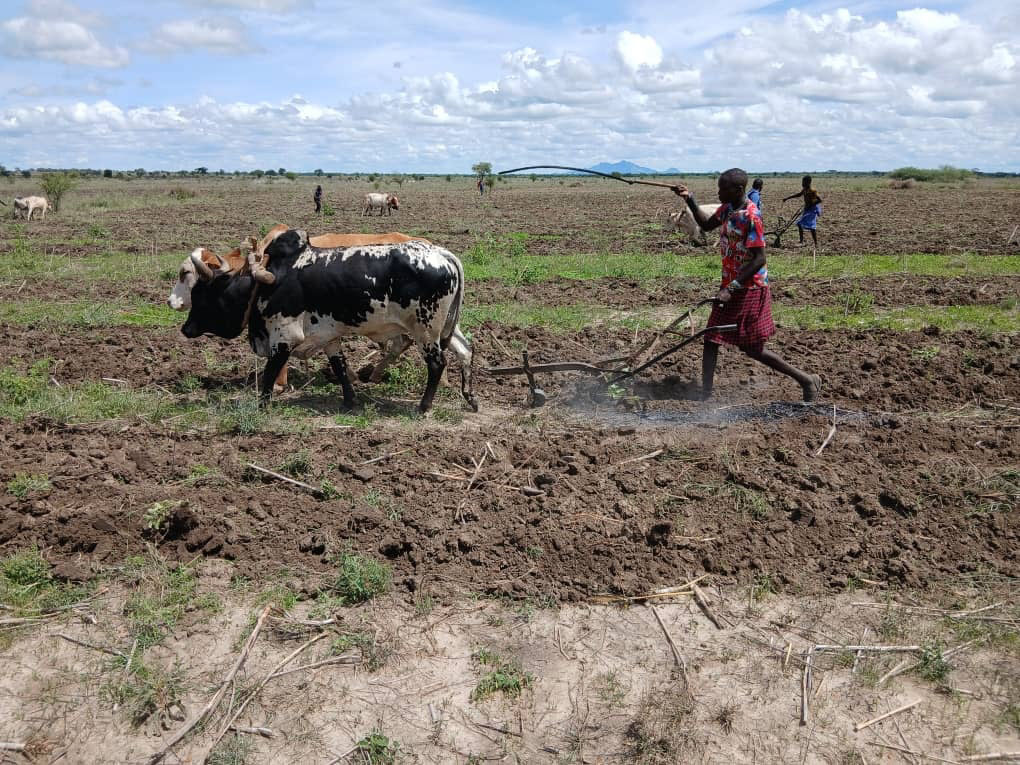
Land grabbing, the large-scale acquisition of land in developing countries by foreign or local companies or individuals, often without due process, is a serious problem in Africa. Over 50 % of total land grabbed worldwide is in Africa. As a result, communities have been displaced, their source of livelihoods taken away. AFJN organizes workshops and conferences, town hall meetings and radio programs to educate local communities about land grabbing, supports small-scale farmers and responsible investments in Africa’s agricultural sector, and advocates for laws to prevent and stop land grabs.
ACT Project
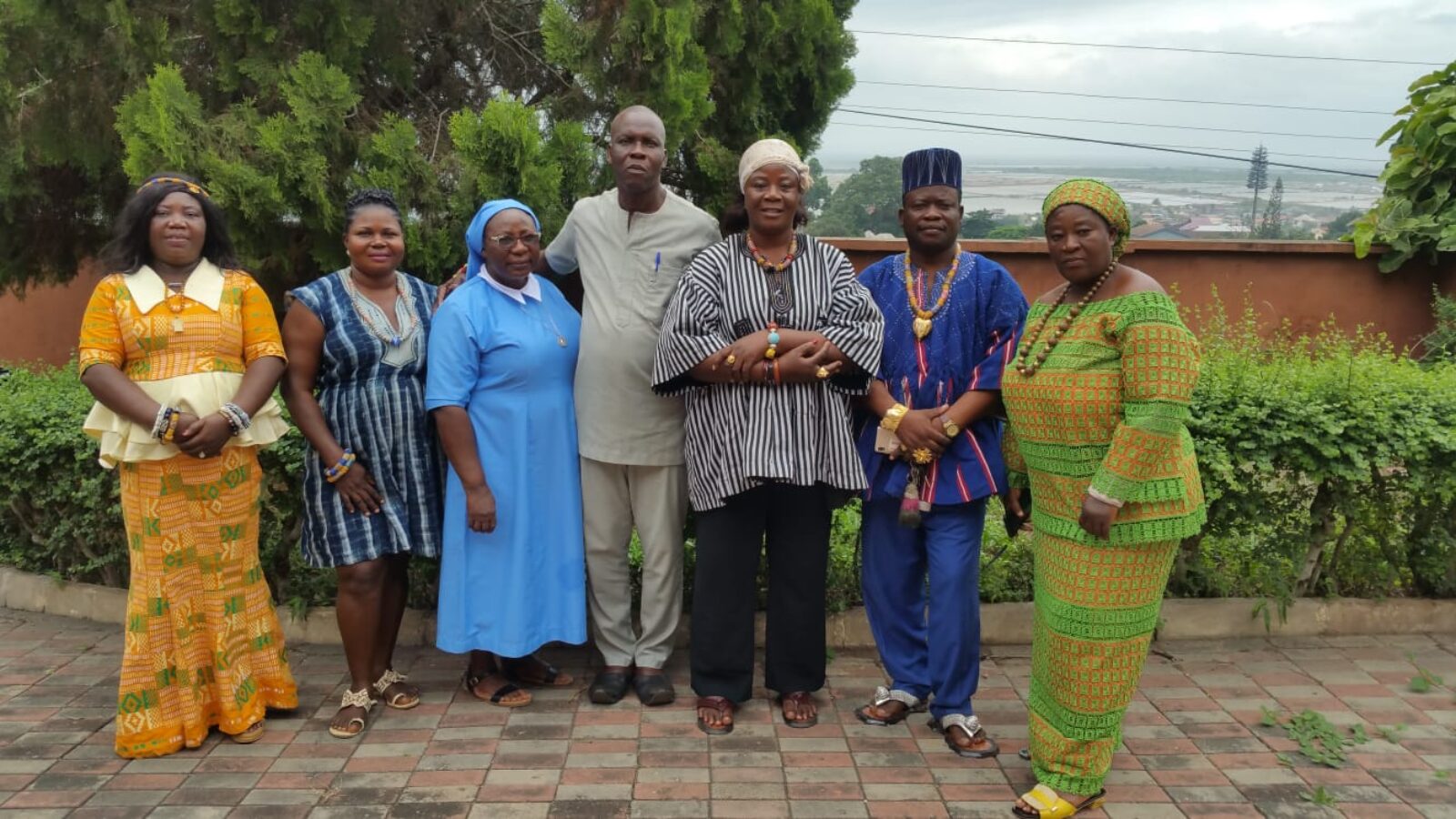
The African Church Together Against Corruption Project (ACT) was a three-year project to mobilize Church leaders from Christian and Muslim communities to fight corruption and promote just governance in Cameroon, Liberia, and Ghana which ended in April 2022. The purpose of the ACT Project is to build a coalition of religious leaders and civil society groups by training them in contextual social analysis and advocacy (based on the Scriptures and Catholic Social Teaching) and empowering them to mobilize and tackle the widespread corruption in their communities. AFJN’s vision was to create a coalition of leaders who would be a powerful force for change, built from the ground up, to combat corruption at the local level. In light of Civil War and the COVID-19 Pandemic parts of the project needed to be adjusted to accommodate the changing environment.
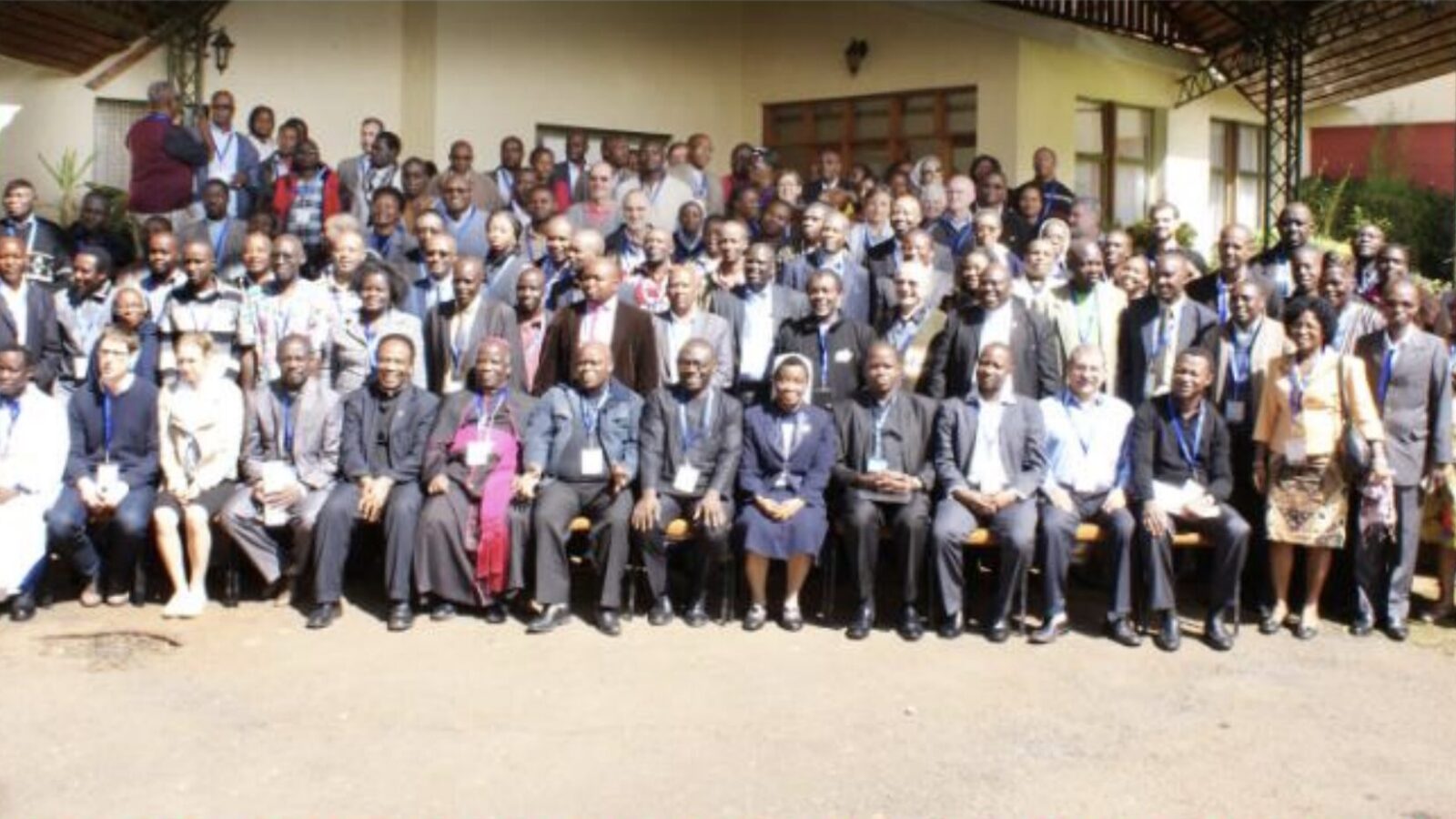
Landgrabbing Conference on Africa
To commemorate the 10th anniversary of the Continental Land Grabbing Conference—an initiative launched by AFJN in partnership with African and European allies—we have commissioned a documentary showcasing our work in Ghana, where AFJN actively implemented the Conference’s resolutions. The film is set to premiere in late November and will highlight the grassroots efforts, community mobilization, and policy engagement that have shaped our mission over the past decade.
Agroecology
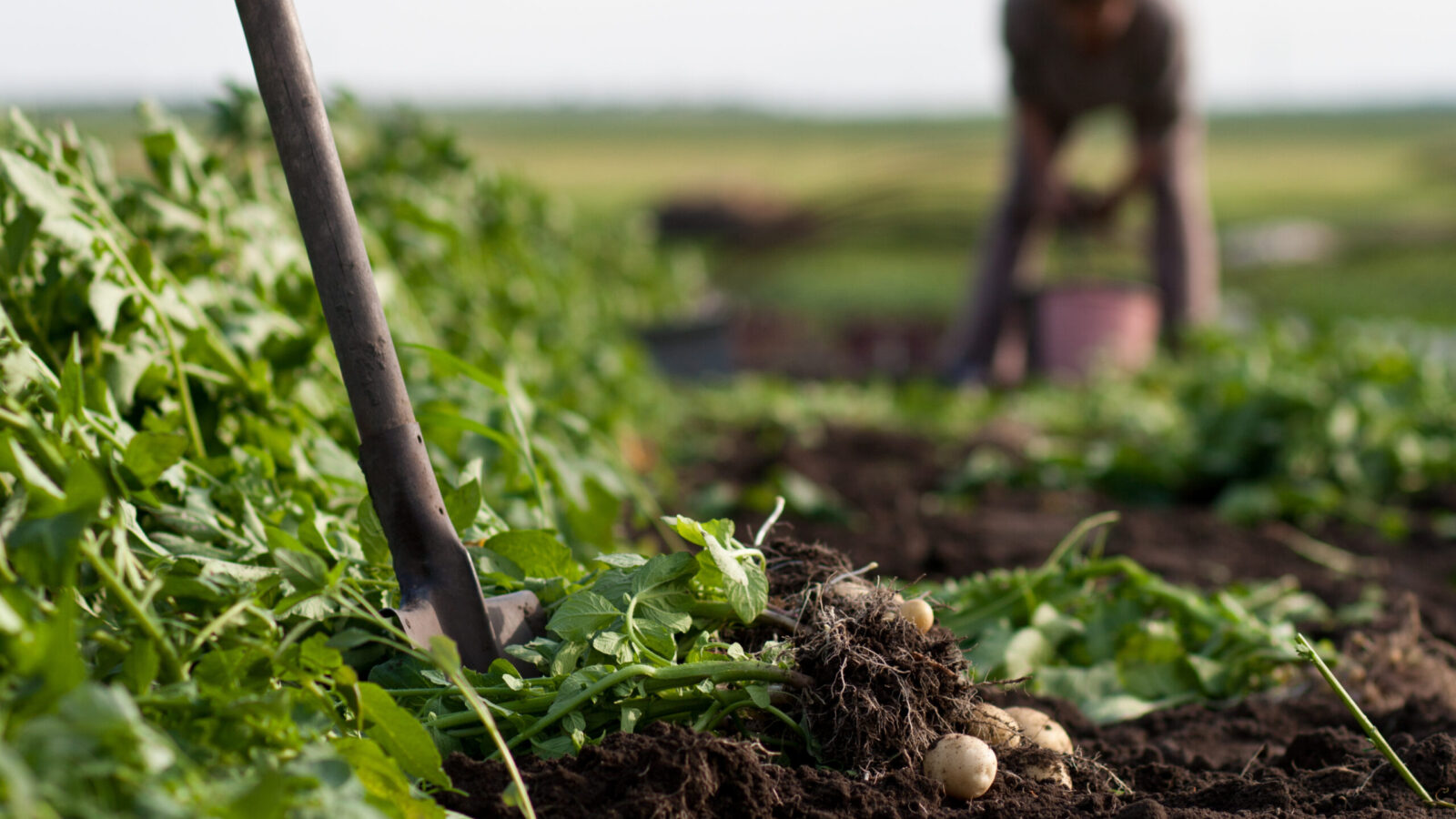
In an effort to address food short-age, African leaders are turning to multi-national corporations for large scale food production, and enacting laws that give sweeping concessions to introducing Genetically Modified Organisms (GMO) on the continent. But GMOs:
- Create seed monopoly and dependency on corporations
- Threaten African small scale farmers
- Control local agricultural economy and impact local agriculture
- Shock the ecological system
- Have health implications yet to be fully determined
AFJN creates awareness on these issues and cautions against GMOs.
Environmental Justice

Some African countries for very little money are accepting toxic waste from developed nations, some as a deal for foreign assistance. These hazardous chemicals are an ever growing and lucrative business, with serious health implications and environmental impacts on affected communities. Such is the case with Trafigura, a Dutch company that dumped toxic waste in Abidjan Ivory Cost resulting in death and disease for the local communities. AFJN advocates for robust legislations on dumping of nuclear and industrial waste in African countries and educates local communities about the impact of toxic waste on their health and the environment.
Food Sovereignty in the News
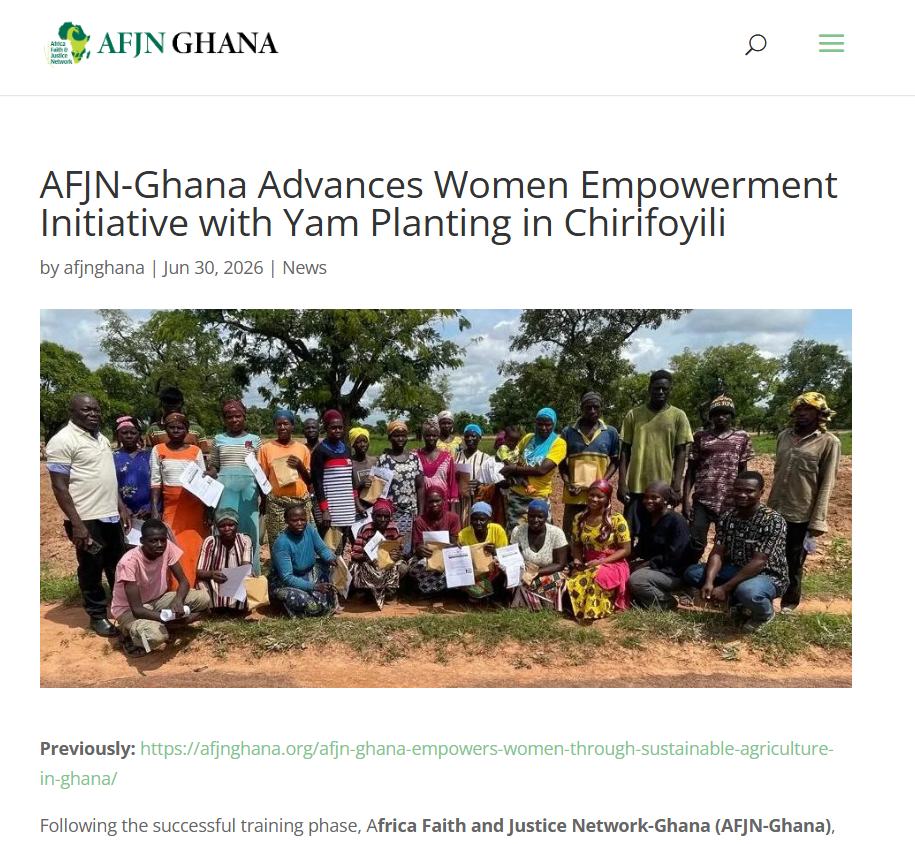
In the News – Yam Planting Featured in AFJN-Ghana Article
On June 30, 2026, the work of the Africa Faith and Justice Network’s Women Empowerment Project farming initative was featured in the “AFJN-Ghana Advances Women Empowerment Initiative with Yam Planting in Chirifoyili” article in AFJN-Ghana.
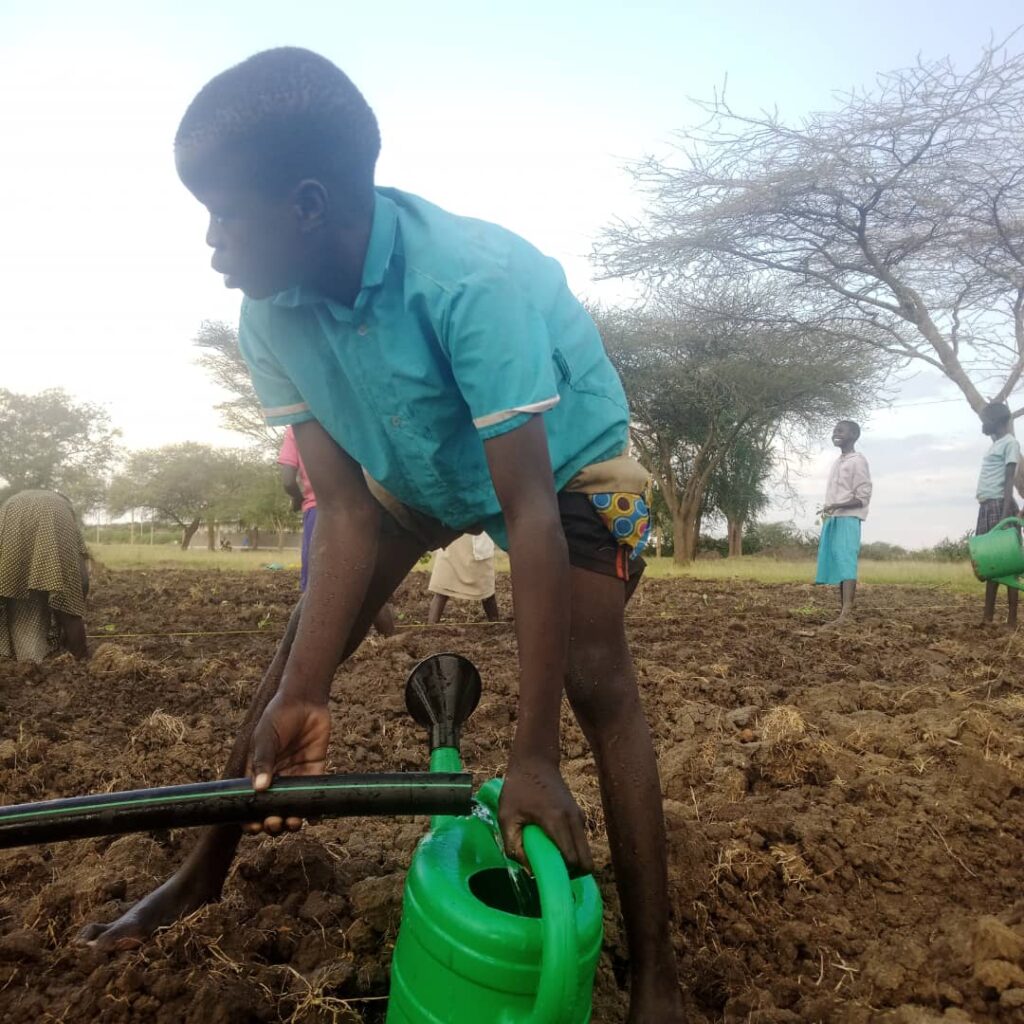
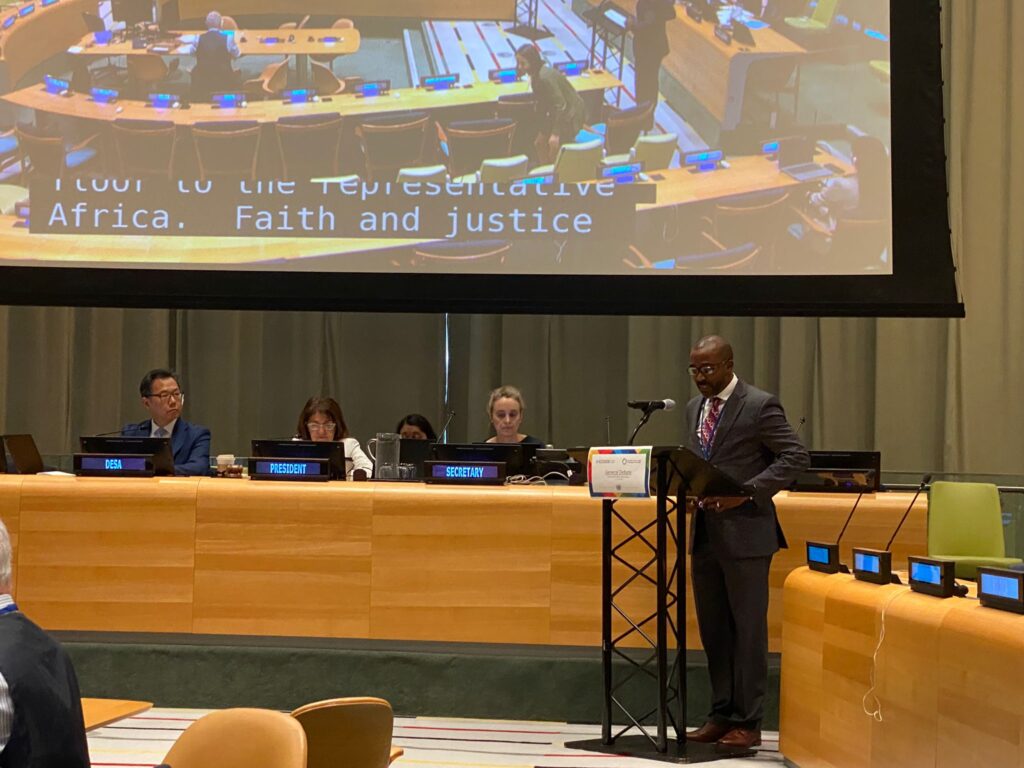
AFJN Executive Director Addresses High-Level UN-ECOSOC Segment on the Land Grabbing in Africa
On July 17, 2024, Dr. Steven Nabieu Rogers, Executive Director of the Africa Faith and Justice Network (AFJN), had the privilege of addressing the ministerial plenary at the 2024 United Nations (UN) Economic and Social Council (ECOSOC) High-Level Segment in New York. The theme of the general debate was “Reinforcing the 2030 Agenda and eradicating poverty in times of multiple crises: delivering sustainable, resilient, and innovative solutions.”
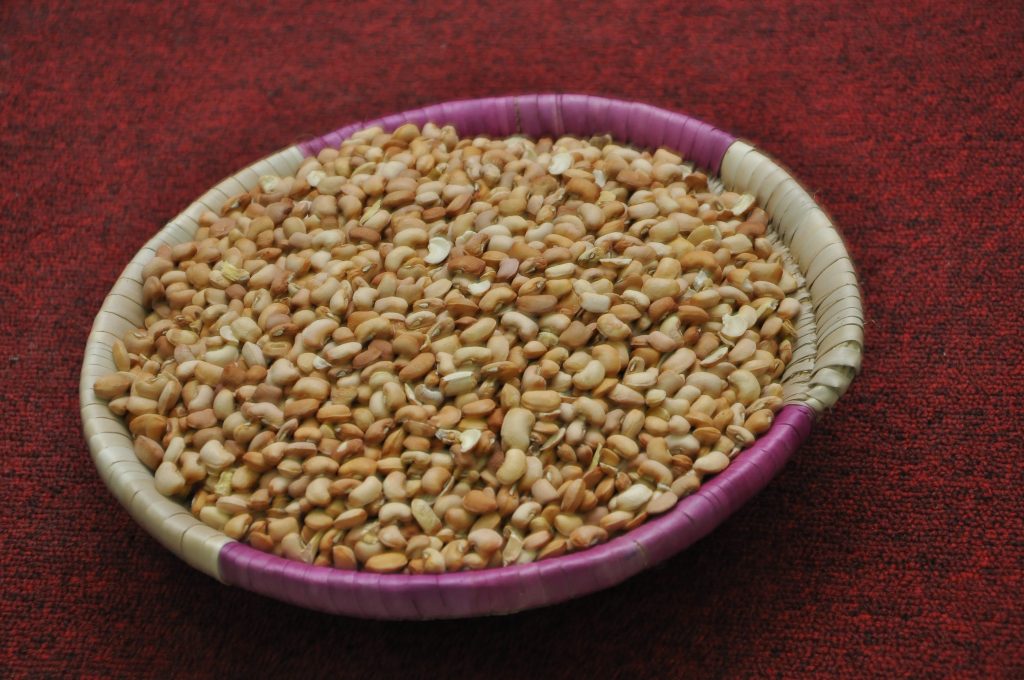
Seed Sovereignty Struggle vs. Genetic Modification of Africa’s Indigenous Seeds
Genetically modifying African indigenous seeds must be carefully examined so as to understand the cost-benefit relationship of…