Jacques Bahati

Africa carries roughly a quarter of the global disease burden but produces only about 3% of the world’s medicines. Uganda alone spends an estimated US$500 million or more each year…
The African Catholic Association of the Washington Metropolitan Area organized a celebration of Ecclesia in Africa and “Africa’s Gift to the Church” on Saturday, September 12, 2026, featuring a keynote…
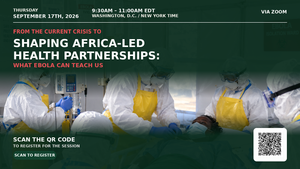
The Africa Faith and Justice Network (AFJN) and the Advocacy Network for Africa (AdNA) invite you to “From the Current Crisis to Shaping Africa-Led Health Partnerships: What Ebola Can Teach Us,” an online event on Thursday,…
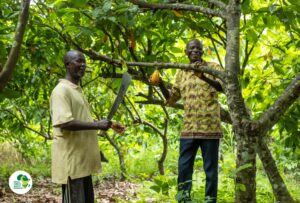
Jane Adzorlolo is a young, vibrant woman from Tafi Agorme in Ghana’s Volta Region. She manages her family’s cocoa farm after her father became too ill to continue farming. Although…
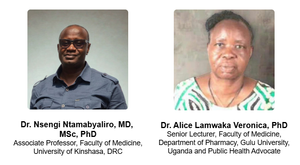
This article draws on two U.S.-based awareness briefings intended to encourage international solidarity with affected communities. As Prof. Muyembe put it, “Ebola is not a threat only for the DRC.…

From July 17 to July 18, 2026, the Africa Faith and Justice Network (AFJN) traveled to Ghana’s Kpetoe and Ziokpe district and Atratsi Municipal to continue its work on land…
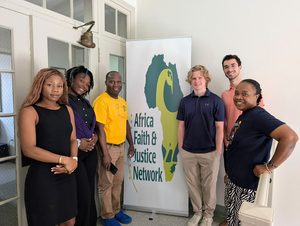
This summer, Africa Faith and Justice Network (AFJN) interns built on the organization’s participation in the 2026 Ecumenical Advocacy Days conference in Washington, DC. Centered on the theme, “Protecting People,…
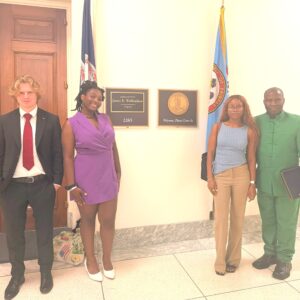
This summer, Africa Faith and Justice Network (AFJN) interns brought the urgent crisis in eastern Democratic Republic of Congo (DRC) to Capitol Hill, urging U.S. lawmakers to intensify efforts toward…
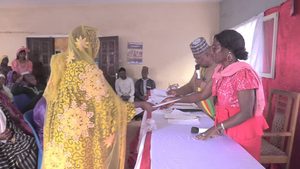
Foumbot, Cameroon — July 14, 2026 — For 307 children in Foumbot, the receipt of a birth certificate marked a vital step from invisibility to recognition. During a public handover…
The attempted killing of two widows in Makeke lays bare how normalised identity‑based violence has become On May 12, 2026 in Makeke, near Mangina in Beni Territory, two Congolese widows…

Across Cameroon, thousands of children remain invisible in the eyes of the law—without birth certificates, they are effectively excluded from education, healthcare, and full participation in society. This report by…

Through its “Unity Through Diversity” initiative, Africa Faith and Justice Network (AFJN), in partnership with Music Artists for Peace, is advancing a bold yet deeply grounded approach: using music as an instrument of social repair
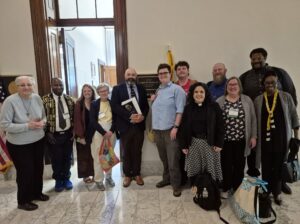
From April 20–22, 2026, the Ecumenical Advocacy Days (EAD) National Gathering convened in Washington, DC under the theme “Protecting People, Peace, and Planet.” The gathering reaffirmed that advocacy is not peripheral but essential to Christian discipleship. For the Africa Faith and Justice Network (AFJN), this commitment flows from the conviction that faith must shape public engagement, particularly in confronting injustice.
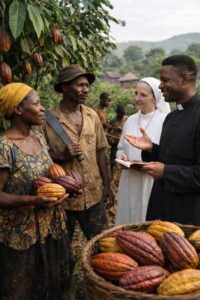
Cocoa is one of the world’s most important agricultural commodities, sustaining millions of families across Africa, Latin America, and Asia. Yet the farmers whose labor makes this global industry possible…
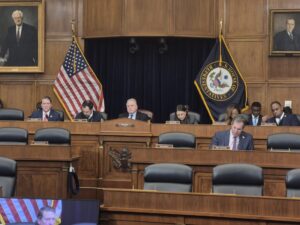
On January 22, 2026, Africa Faith and Justice Network (AFJN), in partnership with DR CONGO FORWARD, submitted a formal Statement for the Record to the U.S. House Committee on Foreign…
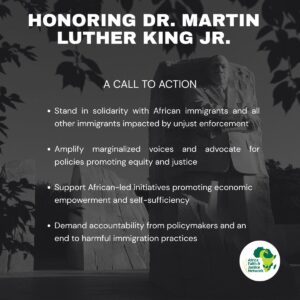
As we commemorate Dr. Martin Luther King Jr.’s birthday, we reflect on his tireless advocacy for justice, equality, and human rights. His message resonates deeply with the struggles and triumphs…
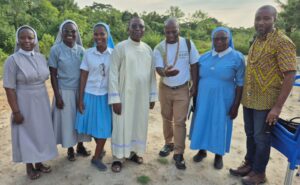
Download the PDF file of this report here Introduction Since 2014, the Africa Faith and Justice Network (AFJN) has been at the forefront of campaigns against land grabbing in the…

Download the report in pdf file here Introduction The Unity Through Diversity program, initiated by AFJN, seeks to promote peaceful coexistence between ethnic groups in the Democratic Republic of Congo…

Africa cannot achieve its full development potential while its digital backbone is externally controlled. Africa is rapidly adopting digital systems across public administration, finance, health, land management, taxation, and procurement. These systems promise efficiency, transparency, and improved service delivery. However, the dominant model of digitalization across the continent relies heavily on foreign-owned, foreign-managed, and foreign-maintained digital infrastructure. This reliance poses serious challenges to Africa’s economic sovereignty, job creation, innovation capacity, and long-term development prospects.
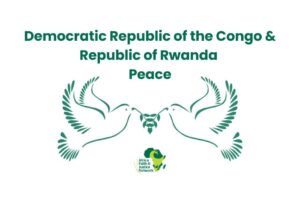
Today, December 4, 2025, Presidents of the Democratic Republic of the Congo (DRC) and the Republic of Rwanda authenticated a long-awaited peace agreement—which many hope will usher in a new era of stability in a region marked by decades of conflict, displacement, and silent suffering. Peace is always worth pursuing. But not all peace agreements are created equal, and some carry within them the seeds of future instability.