Restorative Justice
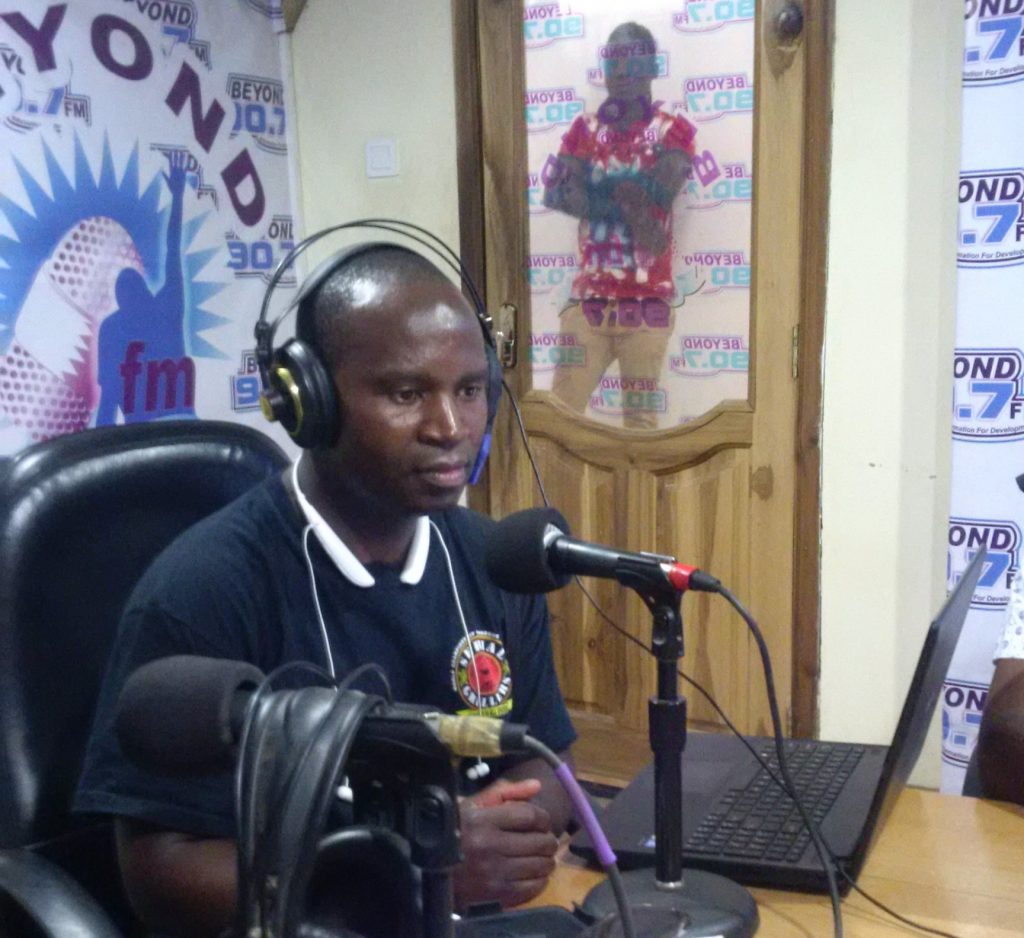
Prosecuted for Advocacy
The United States Constitution makes it possible for citizens to express our true beliefs, a freedom we…
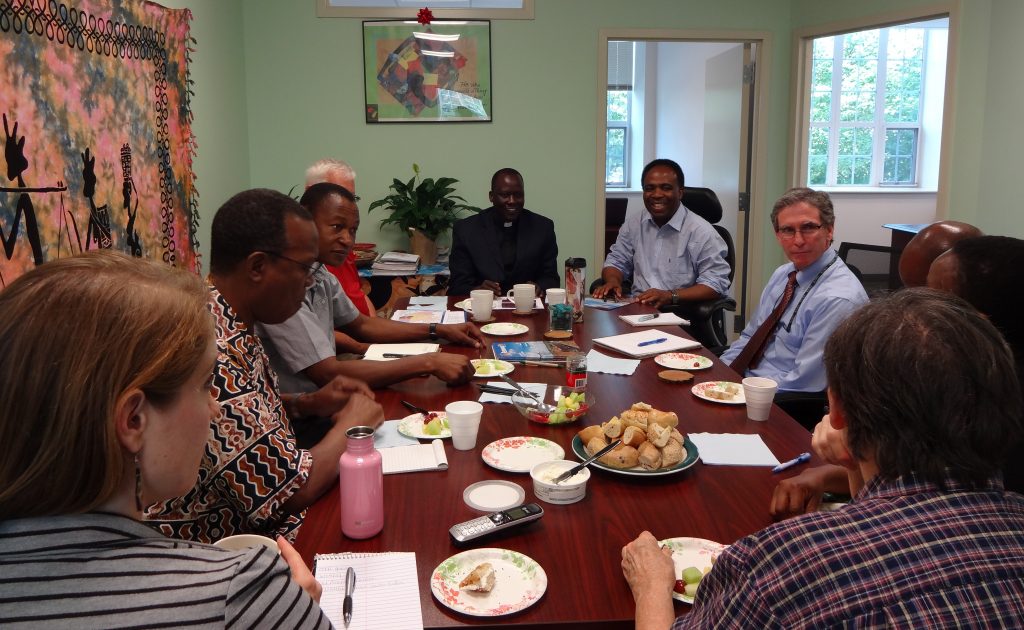
Crisis in South Sudan: an analysis by the Vice Chancellor of the Catholic University in South Sudan
An Interview by Barthelemy Bazemo, AFJN Policy Analyst South Sudan became the world’s youngest nation on July…
National Catholic Reporter: AFJN’s Fr. Okure on Kidnapped Nigerian Girls
On May 9, 2014 AFJN Executive Director Fr. Aniedi Okure, OP was quote in Michael Sean Winter’s…
AFJN Event: Seeking Peace and Forgiveness
Conflict Resolution and Reconciliation in Africa What is “restorative justice”, and how is it different from punitive…
Global Peace Initiative for Women Inspires Hope and Courage
This artlicle was first pulished in AFJN’s January-March Newsletter To celebrate its 10th anniversary, the Global Peace…
You Cannot Compare Apples to Oranges: Ubushingantahe vs. Criminal Justice
By: Josh Perry The solidified rules of law present in the United States have been ironed out…
Justice, Reconciliation and Peacebuilding Seen Through Africa Eyes
Download the full PDF document here or watch part of his presentation here Between 1980 and 2003,…
Outreach Based on Need not Creed
By Rocco Puopolo s.x., Executive Director Bishop George Biguzzi of the Diocese of Makeni, Sierra Leone, was…
D.R. Congo: A Call for Truth and Reconciliation
Justice in Democratic Republic of the Congo is mainly accessible to and protects the powerful, those who…
Women of Wajir
In the early 1990’s, six women began a process that transformed much of the Wajir district in…
Post-Conflict Burundi and the Role of Ubushingantahe Council
Written by Barbara Vi Thien Ho. The legacy and the contribution of Ubushingantahe institution to justice and…
Promoting International Support for Community-Based Justice Mechanisms in Post-Conflict Burundi and Uganda
As part of AFJN’s ongoing research on restorative justice, staff members Bahati Jacques and Beth Tuckey wrote…
‘Greetings’ in Burundian Culture
Hearing Burundians greet each other and greet us in Kirundi got me curious about finding out the meaning of these daily greeting rituals. The finding is, astonishingly, a good ground on which Burundians can build bridges of reconciliation and recovery from the hurt caused by years of war.
In fact, greetings in Burundi are full of expressions of wishes for peace for individuals and for the whole community. In the morning, you say mwaramutse. It literally means ‘did you wake up?’ It can also mean ‘did you survive?’ This question is about surviving the unexpected challenges that can happen in the dark of the night.
Evolving Political Situation in Burundi
This article was originally posted on January 29th, 2009 during AFJN’s trip to Burundi and Uganda. It…
Follow Bahati and Beth in Central Africa!
AFJN Staff Members Bahati Ntama Jacques and Beth Tuckey are currently in Burundi and Uganda conducting research…
Read Rocco’s Blog from West Africa
From November 2nd through December 2nd, Africa Faith and Justice Network’s Executive Director, Rocco Puopolo, s.x. visited…
Why Restorative Justice?
By Rocco Puopolo Why Restorative Justice? In our Western culture, there is a tendency to automatically equate…
The Process of Restorative Justice in Sierra Leone
Q&A with Emmanuel Roberts The government of Sierra Leone requested that UN Security Council establish an international…

AFJN Discusses Restorative Justice with Bigombe
On October 4th, AFJN Staff and Interns met with Betty Bigombe to discuss restorative justice. Bigombe, currently…
Reconsidering Methods of Peacebuilding in Africa
Within the field of conflict resolution and peacebuilding, there exists a question of how present the international…